
Casinos That Accept POLi in Australia: what the listicles forgot to tell you
 Available in US
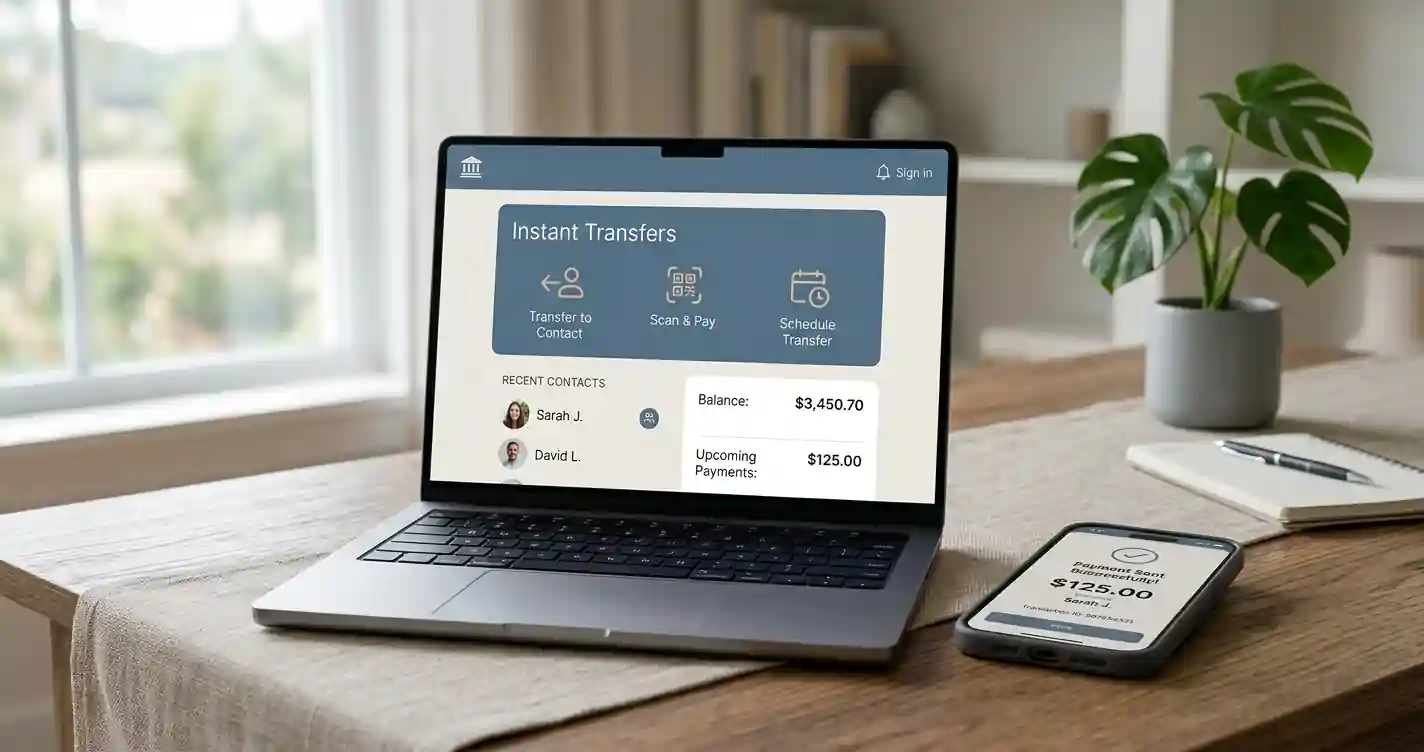
Can You Still Use POLi at an Online Casino in Australia?
No. POLi stopped operating in Australia on 30 September 2023, after Australia Post announced the wind-down on 13 July that year. The legal entity, POLi Payments Pty Ltd, went to voluntary deregistration in May 2025. No casino cashier can pull money from an Australian bank account through POLi today, regardless of what the logo row says.
That is the whole answer, and it took ninety words because the evidence matters more than the verdict. Search the phrase and you will get a dozen pages ranking a dozen casinos, each promising instant POLi deposits, each with a datestamp from this year. They are all describing a service that has been switched off for over two years.
The useful question is the one underneath: you wanted the thing POLi did. Instant transfer straight from internet banking. No card number typed into an offshore cashier. No fee. No account to register. That capability did not die with POLi — it moved, and it got better. It lives on the New Payments Platform now, wearing the names PayID and Osko, and it is in the cashier of most sites that take Australian players.
So this page does two jobs. First, it explains what happened to POLi and why every list you just scrolled past is wrong, because you deserve to know why the internet lied to you. Then it maps the replacements properly: seven live deposit rails compared on speed, direction and cost, eight AU-facing sites that actually run the bank rail, and honest notes on what cannot be verified.
Can I still use POLi to deposit at an online casino in Australia?
No. POLi’s Australian operations closed on 30 September 2023, and the company entered voluntary deregistration in May 2025. No cashier can pull funds from an Australian bank account through POLi today. Any site still advertising POLi deposits is running copy it never updated.
What Actually Happened to POLi Payments
POLi had a seventeen-year run. It launched in 2006 under the name Centricom, out of Melbourne, solving a problem that was genuinely painful at the time: an Australian who wanted to pay a merchant online from their bank account had two options, a card or a transfer that took one to three business days to land. POLi offered a third. Real-time bank payment, confirmed to the merchant on the spot, free to the customer.
Australia Post acquired it and ran it until the economics stopped working. The closure notice went to merchants on 13 July 2023, signed by general manager Susan Nicholson, and the language was the usual corporate gratitude wrapped around a hard stop. Australia Post’s own statement credited POLi with “over 17 years” as “a leading Account-to-Account payments solution”. Then it gave merchants eleven weeks to find something else.
The stated reason was declining acceptance by merchants and financial institutions, which had made the business financially unviable. That is accurate but polite. What actually happened is that the banks came for it.
The Banks Moved First
POLi worked by asking you to type your internet banking username and password into a window POLi controlled. It then logged in on your behalf, moved the money, and reported the result to the merchant. Screen-scraping, in other words — no bank ever authorised POLi as an official payment channel, and no API sat underneath it.
Australian banks hated this for the obvious reason. Handing your banking credentials to a third party breaches most banks’ terms of service, and a customer who does it can find their fraud protections voided when something goes wrong. Several banks published standing advice telling customers not to use POLi. That advice sat on bank websites for years while POLi kept processing.
Commonwealth Bank escalated from advice to action in mid-July 2023, blocking POLi vector payments on security grounds, and it was the third of the majors to take that step. Once the largest retail bank in the country closes the door, the merchant proposition collapses — a payment method that fails for a third of your customers is not a payment method. The closure notice went out the same month. The sequence is not a coincidence.
There is a final administrative footnote for anyone who wants to verify the corpse. A notice of proposed voluntary deregistration for POLI PAYMENTS PTY LTD, ACN 105 393 664, was published on the ASIC register on 16 May 2025. Companies in the process of being deregistered do not process casino deposits.
Why the Lists Never Caught Up
Three things keep those pages alive, and none of them is an editorial oversight.
The first is that affiliate pages earn on the click to the casino, not on the accuracy of the payment section. A reader who lands on a POLi page, finds POLi missing from the cashier, shrugs and deposits with PayID instead has still been monetised. The payment method is the hook. The commission does not care whether the hook is true.
The second is that POLi still exists in New Zealand, which means the brand passes a casual check. Type the name into a search bar and you will find a live website, a support section, even a service status page. Nothing about that looks like a dead product, unless you notice the domain ends in .co.nz.
The third is simple neglect. A page that ranks does not get rewritten. It gets a fresh datestamp, and the datestamps on these pages are bold: one of the top results carries “Updated on: June 2nd, 2026” above text that describes POLi as “a fintech company operated by Australia Post” in the present tense. Australia Post has not operated POLi since September 2023.
If you want a test you can apply to any payments guide in thirty seconds, use these three. Does it describe POLi as currently owned or operated by Australia Post? Does it give instructions for withdrawing money via POLi, a thing POLi never did? Does its casino table include Fair Go Casino, which no longer serves Australian players? One hit means the copy predates late 2023. Two means nobody has read it since.
Why did POLi shut down in Australia?
Australia Post cited declining acceptance from merchants and financial institutions, which made the business unviable. The underlying cause was bank resistance to POLi’s model of collecting customer internet-banking credentials. Commonwealth Bank blocked POLi payments in mid-July 2023, the third major bank to do so, and the closure notice followed that month.
Why do so many sites still list POLi casinos for 2026?
Because those pages earn commission on the casino click regardless of whether the payment method works, and a ranking page rarely gets re-read. POLi also still trades in New Zealand, so the brand survives a quick look. Fresh datestamps get applied to text nobody revised.

How POLi Worked, and Why That Model Has No Future
Worth understanding the mechanism, because it explains both the death and the succession.
You picked POLi at the cashier. A window opened, not from your bank but from POLi. You chose your institution from a list, then entered the same username and password you would use on your bank’s own site. POLi took those credentials, logged in as you, initiated a transfer to the merchant’s nominated account, read the confirmation off the resulting screen, and told the casino the money was coming. The casino credited your balance in seconds. You paid nothing — the merchant covered the fee.
From the outside it felt like magic in 2010 and like a security incident in 2023. Nothing about POLi changed. The context did.
The Credential Problem
Every competitor guide still ranking for this topic lists POLi’s advantages, and most of them lead with security. “Enhanced security. POLi utilises 2048-bit SSL encryption.” The encryption claim is true and completely beside the point. Encrypting the channel through which you send your banking password to a third party protects the password in transit. It does nothing about the fact that a third party now has it.
Australian banks were not being precious. A credential-sharing model has no clean way to prove that a given login was authorised by the customer, which wrecks the bank’s ability to adjudicate a disputed transaction. It also trains customers to type banking passwords into windows that are not their bank, which is the exact behaviour every anti-phishing campaign of the last two decades has tried to stamp out.
The consumer position in New Zealand was blunter than anything published here. Consumer NZ’s assessment was that POLi “breaches your bank’s terms and conditions” while conceding it was often a customer’s best option anyway, because the local banks had failed to build a real-time alternative. Read that as the epitaph. POLi existed in the gap left by absent infrastructure, and it lived exactly as long as the gap did.
What Open Banking Did Instead
Australia closed the gap in 2018 with the New Payments Platform. Bank-to-bank, near real time, 24 hours a day including weekends and public holidays, addressed by a PayID or a plain BSB and account number. No third party in the middle. Authorisation happens inside your own banking app, where it belongs.
Once that existed, POLi was selling a worse version of a service every bank now offered natively, with a security model the banks were actively warning customers against. The interesting part is that POLi’s surviving New Zealand business agrees. It is migrating payment initiation for ASB, Westpac, ANZ and BNZ customers onto open-banking APIs, with Kiwibank to follow once its API ships. Same brand, same product name, completely different plumbing — because the original plumbing was the problem.
Scale makes the point unanswerable. The NPP now connects over 100 banks, financial institutions and fintechs. It carried 1.97 billion transactions in the twelve months to June 2026, averaging more than 171 million a month and $8.4 billion in value per day. There are over 38 million registered PayIDs in a country of roughly 27 million people, which tells you most adults with a bank account have set one up and plenty have registered more than one. POLi did not lose to a competing product. It lost to national infrastructure.
Is PayID safer than POLi was?
Structurally, yes. POLi required you to enter internet-banking credentials into a third-party window, which several Australian banks warned against and treated as a terms breach. PayID keeps authorisation inside your own banking app, shares no credentials with anyone, and shows the registered account name through Confirmation of Payee before money moves.

The Deposit Rails That Replaced POLi
Seven options fill the space POLi used to occupy, and they are not interchangeable. Two are instant and free. One is slow and traceable. One removes your bank from the transaction entirely. One is irreversible by design. The table sorts them by how closely each reproduces what POLi actually did for you.
| Method | Speed to casino | Direction | Cost to player | Practical limit | Best for |
|---|---|---|---|---|---|
| PayID | Seconds on the bank leg | Both ways | Free at every major bank | Set by your bank’s daily transfer cap | The closest match to POLi, plus payouts POLi never had |
| Osko | Seconds on the bank leg | Both ways | Free at every major bank | Same bank daily cap as PayID | Paying to a BSB and account when no PayID is offered |
| BPAY | Same day if before ~6pm Sydney time, biller credited next business day | Deposit only | Free from internet banking | Set by your bank’s payment cap | A clean bank record when speed does not matter |
| Direct bank transfer | Seconds to 1 business day, plus the casino’s own batch cycle | Both ways | Free from internet banking | Set by your bank’s daily cap | A fallback when the cashier lists no fast option |
| Debit card | Instant | Deposit only | Free unless the casino adds a surcharge | Your available account balance | Card convenience without touching credit |
| Neosurf | Instant once the PIN is entered | Deposit only | Retail purchase, resellers add margin | AU$10 to AU$500 per voucher | Getting past a bank gambling block with cash |
| Crypto | Minutes, network dependent | Both ways | Network fee, no casino fee typically | Whatever the operator allows, usually the highest ceiling | Speed and high limits, with no way to undo a mistake |
PayID — the Direct Heir
PayID is an addressing layer on the New Payments Platform, run under Australian Payments Plus. Instead of a BSB and account number, you send to an identifier: a mobile number, an email address, an ABN, or an organisation identifier. Over 38 million PayIDs were registered as at 31 July 2026. It is not a gambling product, has no connection to the industry, and was not built with casinos in mind — which is precisely why it is more dependable than anything that was.
For anyone who liked POLi, this is the same experience with the sharp edges filed off. Instant, free at every major bank, available at 3am on a public holiday, and you never hand a credential to anybody. You open your banking app, enter the operator’s PayID, check the account name that Confirmation of Payee displays back at you, and approve. That name check is a genuine improvement rather than a marketing line: it is your one chance to notice that the address you were given belongs to somebody unexpected before the money is gone.
The mobile question answers itself here, which is why this page has no separate section about depositing on a phone. The rail lives inside your banking app. The default way to use PayID is on the device in your hand, and the desktop version of the flow is the awkward one.
Osko — the Rail Underneath
Osko is the NPP overlay that actually moves the money. PayID is the address; Osko is the transport. Which means the distinction people draw between a “PayID casino” and an “Osko casino” is mostly cosmetic — the payment travels the same wires either way, and the difference is only whether you addressed it to an identifier or to a BSB and account number.
Your bank has probably renamed it. Osko appears in banking apps as “Fast Payment”, “Instant Transfer”, or occasionally under its own name, and the inconsistency is a branding decision rather than a technical one. Worth knowing when a cashier says Osko and your banking app says nothing of the kind: you are looking for the fast transfer option, and if both institutions support it, the money arrives in seconds.
Where Osko earns its own entry is the case where the operator gives you bank details but no PayID. That happens often enough at offshore cashiers, and the old assumption that a BSB transfer means waiting until Tuesday is simply out of date when both ends sit on the NPP.
BPAY — Slower, Fully Traceable
BPAY is the bill-payment scheme every Australian already knows from their electricity account: a biller code, a customer reference number, both entered from internet banking. It reaches more than 45,000 registered billers. It is older than the NPP, unglamorous, and completely reliable.
The timing is the trade-off, and the published figures are unambiguous. Submit before roughly 6pm Sydney or Melbourne time on a banking business day and it processes that day, with the biller typically receiving funds the next business day. One to two business days is the realistic window. The ATO warns that payments to it can take up to four business days to appear. Nobody should expect a BPAY deposit to hit a casino balance while they watch.
So who uses it? Someone who wants the transaction to sit in their banking history with a clean reference, priced at zero, and who is not planning to play in the next ten minutes. It is the opposite trade to POLi’s — maximum record, minimum speed — and it is genuinely the right call for a player funding an account deliberately rather than impulsively. Which, if we are honest about the psychology of deposit friction, is a point in its favour.
Direct Bank Transfer — the Rail POLi Was Built to Dodge
The plain BSB-and-account credit transfer is the method POLi existed to improve on, and it has quietly caught up. When both institutions sit on the NPP, and with 128 million accounts reachable across 100-plus institutions most now do, a “bank transfer” is frequently an Osko payment that happens to be addressed the old-fashioned way. The one-to-three-business-day expectation printed in cashier help pages is a fossil.
What has not caught up is the casino side. Offshore operators batch incoming transfers, reconcile them against player accounts on their own schedule, and often route first deposits through verification before crediting. The bank leg can finish in four seconds and the balance can still take four hours to appear. When a deposit feels slow, this is almost always where the delay lives, and blaming the rail is a mistake plenty of cashier support agents are happy to let you make.
Debit Cards — What Survived the Credit Ban
Here is the distinction that half the internet gets wrong. Australia banned credit cards, credit-linked products and digital currency as payment methods for interactive wagering services, effective 11 June 2024, with penalties reaching $247,500. It did not ban cards. A debit card draws on cleared funds sitting in your transaction account, which is not credit, and it is not caught by that prohibition.
Practically, a debit card is the fastest cashier-side option after the bank rails and requires no setup at all. The catches are worth naming. Your card details end up with an offshore merchant, which is a different risk profile from a bank rail where nothing reusable changes hands. Chargebacks exist on paper but are painful to pursue against a gambling operator in another jurisdiction. And banks that extend their gambling blocks to debit will decline the transaction outright under merchant category 7995, without much explanation at the till.
Neosurf — Cash, No Bank in the Transaction
Neosurf is a French-origin prepaid voucher, bought for cash at retail, redeemed as a ten-digit PIN. In Australia the stockists are the usual suspects: 7-Eleven, newsagents, petrol stations, Australia Post outlets. Face values run from around AU$10 to AU$500, with the lower tiers most commonly on the shelf and the higher ones easier to find through online resellers, who take a margin for the convenience.
Its entire reason for existing, in this context, is that there is no bank in the transaction. If your institution has blocked gambling merchants and you have decided to proceed anyway, a voucher bought with cash is the route that does not care what your bank thinks. That is a real capability, and it deserves a real caveat: the mechanism that defeats a bank block also defeats a bank block you set up on purpose. If you switched one on for a reason, buying a voucher to get around it is worth a moment’s honest thought.
One hard limit. Nothing pays back to a voucher. Neosurf is deposit-only, so any winnings will leave by a different route entirely, and you will need to set that route up anyway.
Crypto — Fast Both Ways, No Take-Backs
Crypto dominates offshore cashiers aimed at Australians, typically Bitcoin, Ethereum, Litecoin and USDT. It is fast in both directions, carries the highest limits on offer, and keeps the transaction outside the banking system altogether.
The legal position gets misreported constantly, so here it is precisely. The digital-currency prohibition that commenced on 11 June 2024 binds interactive wagering service providers subject to Australian law — the licensed sportsbooks. It is not the provision that governs an offshore casino, because supplying online casino games to someone in Australia is already prohibited outright under the Interactive Gambling Act. Different mechanism, different target. A player depositing crypto at an offshore casino is not breaching that section, and anyone telling you crypto deposits are federally banned for players has conflated two separate things.
What should actually concern you is irreversibility. The speed and the absence of recourse are the same property viewed from two angles. Send to a wrong address, or to an operator that stops answering emails, and there is no bank, no card scheme and no regulator to reverse it. Network fees and price movement between deposit and withdrawal add their own friction. Crypto is the right tool for someone who understands that trade and the wrong one for anybody choosing it because a cashier offered a bonus for it.
What is the best replacement for POLi at Australian online casinos?
PayID, running over the Osko rail. It reproduces everything players valued about POLi — instant, free, straight from internet banking, no card details handed to the casino — while removing the credential sharing that killed it. It also supports withdrawals, which POLi never did. BPAY and Neosurf cover the fallback cases.

Casinos Running the Bank Rail POLi Used to Own
You came here for a list of sites. Here is one, with the substitution stated openly: these are operators that take Australian players and run the instant bank rail that replaced POLi, not operators that accept POLi, because none exist.
How This List Was Put Together
A note on method, because the methodology is the only thing separating this from the tables you have already scrolled past.
Every site below is offshore. That is not a preference, it is arithmetic — the Interactive Gambling Act makes it illegal to supply online casino games to a person in Australia, so no Australian-licensed online casino exists to be listed. Competitor pages that use the phrase “licensed Australian casinos using POLi” are describing a category that cannot exist. All of these operators hold licences from Curaçao, which since the National Ordinance on Games of Chance came into force on 24 December 2024 is administered directly by the Curaçao Gaming Authority with a public register, replacing the master-and-sub-licence arrangement that ran from 1993.
That reform matters for reading any casino review written before 2025. A licence string in the old 8048/JAZ master format, quoted as though it were current, tells you the page has not been touched since the regime changed. Legacy licences under the previous ordinance ran to 24 June 2025 with a six-month extension available. Anyone citing one in 2026 is quoting a superseded instrument.
What this page will not do is print bonus amounts, payout percentages or wagering multipliers as fact. Those figures appear all over the affiliate material for these brands and they contradict each other flatly — the same casino is credited with a AU$5,000 welcome offer on one page and AU$10,500 on another, and “98% payout” columns are asserted without any audit behind them. None of it comes from a primary source. So the table records what can be established and drops the columns that cannot, which is why there is no bonus column and no withdrawal-speed column. A column filled with vague filler is worse than no column.
| Site | Licence jurisdiction | Bank rail in cashier | Other rails | Lobby character |
|---|---|---|---|---|
| Neospin | Curaçao | PayID | Crypto, voucher | SoftSwiss platform, broad pokies range, Mega Moolah present |
| Ricky Casino | Curaçao | PayID | Crypto, voucher, card | Long-running AU-facing brand, heavy pokies weighting |
| Wolf Winner | Curaçao | PayID | Neosurf, crypto | Large pokies library, AUD accounts throughout |
| JokaRoom VIP | Curaçao | PayID | Crypto, voucher | Table games alongside pokies, repeatedly relaunched domains |
| Stellar Spins | Curaçao | PayID | Neosurf, crypto | Pokies-led with live tables attached |
| Jackpot Jill | Curaçao | PayID | Crypto, voucher | AU-targeted branding, pokies focus |
| Rio Ace | Curaçao | PayID | Crypto, card | Newer entrant, live dealer section prominent |
| Oshi Casino | Curaçao | PayID | Crypto-first, multiple coins | Crypto-native cashier with a bank rail bolted alongside |
Neospin
Neospin runs on the SoftSwiss platform, holds a Curaçao licence, denominates accounts in AUD and puts PayID in the cashier alongside crypto. The SoftSwiss detail is more useful than it sounds: it is a widely deployed white-label platform, which means the cashier behaviour, verification flow and game integration follow patterns you will recognise from other sites built on it. Predictability has value when the operator is offshore.
The lobby carries Mega Moolah, the progressive jackpot that has been the most recognisable name in the category for two decades, which places Neospin among sites licensing from established suppliers rather than assembling an unfamiliar catalogue. For a player whose priority is a working PayID deposit and a pokies library with names they know, that is the relevant signal. The welcome offer is heavily promoted across affiliate pages at figures that disagree with each other, so read the terms in the cashier rather than anywhere else, and assume the wagering condition is the real number that matters.
Ricky Casino
Ricky Casino has been courting Australian traffic longer than most of this list, operates under a Curaçao licence, takes AUD, and runs PayID. Longevity in this market is not nothing — offshore brands aimed at Australia have a high mortality rate, and a site that has held the same domain and the same name across several years has cleared a bar that many of its competitors have not.
It is also among the most heavily affiliated brands in the Australian space, which cuts both ways. You will find it recommended everywhere, ranked first on a great many pages, with bonus figures that escalate depending on who is being paid to publish them. That saturation is a marketing budget, not a quality verdict, and it is worth separating the two. The practical case for Ricky is the boring one: the deposit rail works, the currency is right, the pokies catalogue is deep, and the operator has been reachable for long enough to have a track record.
Wolf Winner
Wolf Winner holds a Curaçao licence, banks in AUD, and is one of the few on this list that visibly runs both PayID and Neosurf in the same cashier. That combination is genuinely useful, and not for the reason the marketing suggests: it means a player whose bank has blocked gambling merchants has a second route on the same site without going hunting for a new operator and starting verification again.
The library is pokies-weighted and large, in the range where the number stops being informative and the filters start mattering more than the total. Where Wolf Winner needs the same caution as the rest: the welcome package is advertised across four deposits at figures that vary by source, and a staged offer spread over several deposits is a structure designed to keep you depositing, which is a fine thing to accept knowingly and a poor thing to accept by accident.
JokaRoom VIP
JokaRoom is one of the oldest names still trading to Australians, under a Curaçao licence, with PayID in the cashier and a game mix that gives table games more room than most of this list. It has also relaunched across a series of domains over the years, and that is the fact a player needs to understand rather than the game count.
Domain rotation is common among offshore brands aimed at Australia, partly in response to ISP blocking — ACMA has requested blocks on 1,822 illegal gambling and affiliate sites since November 2019, and operators respond by moving. The player-side consequence is specific and avoidable: if you hold a balance or a pending withdrawal on a site that changes address, your account details, verification documents and support history are all on the old one. Keep your own record of what you deposited and when, and treat an unannounced domain change as a reason to get your money out rather than a routine technical update.
Stellar Spins
Stellar Spins operates under a Curaçao licence with AUD accounts and PayID deposits, pokies-led with a live dealer section attached. The public information available on it is thinner than for the longer-established names here, which is worth saying plainly rather than padding out with generic praise.
What can be assessed is the shape of the offer, and the shape is familiar: a large percentage-match welcome bonus with free spins attached, of the kind that looks generous in a banner and is governed entirely by the wagering multiplier in the terms. A 400% match is not four times more generous than a 100% match if the turnover requirement scales with it, and it usually does. For a player the useful question is not the headline percentage but whether the maximum bet during wagering is small enough to make clearing it a grind, which is where most of these offers actually live.
Jackpot Jill
Jackpot Jill is built for the Australian market down to the name, runs on a Curaçao licence, accepts AUD and takes PayID. The branding is aimed squarely at a local audience, which is a marketing choice rather than a licensing one — it does not make the operator any more accountable to an Australian regulator than any other site here, because none of them are.
The catalogue is pokies-first with the usual table and live sections behind it, and the site’s promotional rhythm leans on frequent reload offers and tournaments rather than one large entry bonus. That model suits a player who plays regularly at modest stakes more than someone making a single large deposit, since the value is spread across ongoing promotions with their own conditions attached. Read those conditions each time. Recurring offers change terms far more often than welcome offers do, and nobody sends a notification when they tighten.
Rio Ace
Rio Ace is among the newer arrivals courting Australian players, licensed in Curaçao, with AUD support, PayID in the cashier and a live dealer section given unusual prominence for a site of its age. Newer is not automatically worse — a 2025-era launch sits under the current Curaçao framework rather than the superseded one, which is arguably cleaner than a legacy licence mid-transition.
Newer does mean less to go on. A site that has not yet processed two years of withdrawals has no payout record to examine, and a payout record is the only operator claim that genuinely matters. The sensible approach with any recent entrant is a small first deposit, a small withdrawal completed end to end including verification, and only then a decision about whether it deserves real money. That is good practice at any casino and essential at one with no history. Anyone doing the opposite is testing the operator with their bankroll.
Oshi Casino
Oshi is the crypto-native option on this list. Multiple coins, a cashier built around them, a Curaçao licence, and a bank rail available alongside rather than as the default. For a player who wants PayID for deposits and crypto for withdrawals, that combination is the most direct route to the fast-in, fast-out pattern people mean when they search for instant payouts.
The trade is the one the crypto section already set out, and it applies here concretely. Crypto withdrawals leave quickly once approved and cannot be recalled at all, so the verification step becomes the thing to get right early rather than at the moment you want your money. Complete identity checks before you have a balance worth arguing about. Operators that feel fast are usually operators where the paperwork was already done.
The Brands We Left Out
Fair Go Casino appears in the casino table of at least one page currently ranking for POLi searches. It no longer serves Australian players. A site recommending an operator that will not accept its readers has told you exactly how recently it was checked, and it is the single clearest staleness marker in this whole search result.
Slot Monster, PlayMojo, Rocket and Jet4Bet all show up repeatedly across the same affiliate rankings and may well run the bank rail perfectly adequately. They are held back here because the cashier detail could not be corroborated across independent sources, and listing a site on the strength of one affiliate page that also got POLi wrong is not a standard worth adopting. Their absence is a statement about available evidence, not about the operators.

Making the Deposit — What a $10 Top-Up Looks Like Now
The old POLi flow had five steps and a password you should not have been typing. The replacement has four and does not.
Open the cashier, select PayID, and the operator gives you a PayID address along with a reference code. Switch to your banking app, create a payment to that address, and check the account name Confirmation of Payee shows you before approving. Enter the reference exactly as given, because that string is how the operator matches an incoming payment to your account, and a missing reference turns an instant deposit into a support ticket. Approve. The bank leg finishes in seconds.
That reference field is where most self-inflicted deposit problems happen, and it is the part every competitor walkthrough omits.
Minimums Belong to the Casino, Not the Rail
POLi never imposed a minimum of its own and neither does PayID. Both are payment infrastructure, indifferent to amount within your bank’s daily limits. Every minimum you encounter is set by the operator, and at AU-facing sites the common floor sits around AU$10 to AU$20.
The $10 figure is so persistent in searches for this topic that it is worth naming as the market standard it became. Ten dollars gets you into most cashiers on this list. What it frequently does not get you is the welcome offer, because bonus eligibility usually carries its own higher threshold, and the gap between the deposit minimum and the bonus minimum is deliberate. Nobody advertises the second number in the banner.
Australian bank limits form the ceiling rather than the operator. Daily transfer caps on the NPP are set per institution and adjustable in most banking apps, which means a player hitting a wall on a large deposit is usually hitting their own bank’s default setting, not a casino restriction. Worth checking there before contacting cashier support, who will not be able to see it.
Where the Delay Actually Comes From
A deposit that takes twenty minutes on a rail that settles in four seconds is not a slow rail. It is a slow cashier, and the distinction is the most useful thing in this section.
Three things cause it. The operator’s reconciliation cycle, which may batch incoming payments rather than credit them individually. Verification on a first deposit, where funds sit pending until identity documents clear. And a missing or mistyped reference code, which strands the payment until somebody manually matches it. None of these are properties of PayID, Osko or BPAY, and all of them get blamed on the payment method by support agents with no incentive to correct you.
The practical response is to complete verification before you need it. Upload identity documents when you open the account, not when a withdrawal is pending, because the queue you join at the moment you want money out is longer than the one you would have joined on a quiet Tuesday.
What is the minimum deposit at a PayID casino?
The rail imposes no minimum — the casino sets it, commonly around AU$10 to AU$20 at Australian-facing sites. That explains why ten dollars recurs so often in searches. Bonus eligibility usually requires a higher amount than the bare deposit minimum, so check the offer terms rather than the cashier figure.
The POLi Withdrawal That Never Existed
POLi could not pay you. Not slowly, not for a fee, not at all. It was a one-way push rail that moved money from a customer to a merchant and had no mechanism running the other direction. Every “how to withdraw with POLi” section currently ranking for this topic is describing something else and attaching POLi’s name to it.
Where the $10–$60 Figure Came From
The tell is in the numbers. Competitor guides state that POLi withdrawals take up to three business days and cost between $10 and $60. Those are the timing and fee characteristics of an international bank wire, and several of the same pages say so in their own text a paragraph earlier, contrasting POLi’s free deposits against “traditional wire transfers, which typically incur transaction fees ranging from $10 to $60”. Somebody wrote a sentence about wires, then reused the figures in a section about POLi payouts, and everyone downstream copied it.
The other tell is stranger. Two of the top-ranking pages instruct the reader to “visit the POLi website, complete the information form, and pick a price plan” in order to withdraw. Price plans were POLi’s merchant pricing tiers — what a business paid to accept POLi payments. The instruction is telling a player to sign up as a merchant. It has been sitting on pages with current datestamps for years, which is as clear a demonstration as you could want that nobody involved ever tried the process they were describing.
What Actually Pays Out
Three routes, and the choice matters less than most people assume.
PayID and Osko transfers to your own bank account are the fastest legitimate option once the operator releases the funds, arriving in seconds on the bank leg, and this is the capability POLi genuinely lacked. Conventional bank transfer to a BSB and account number works everywhere and now often travels the same NPP rails anyway. Crypto is fast and final, with no reversal available if you send to the wrong address. Neosurf and BPAY pay out nothing, being structurally deposit-only, so a player who funded with either will need a different route out and should set it up before they need it.
Now the part every “instant withdrawal” claim refuses to acknowledge. The rail is never the constraint. An operator’s internal approval queue, its manual review of larger wins, and its identity verification requirements are what determine whether your money arrives today or on Thursday. A payment rail that settles in four seconds sitting behind a 48-hour approval process is a 48-hour withdrawal, and describing it as instant is a marketing decision rather than a measurement.
Which means the honest advice for anyone chasing fast payouts is unglamorous. Verify early, keep withdrawal requests inside whatever limit the operator processes without manual review, and do not expect any payment method to out-run an offshore compliance team on a weekend.
Can you withdraw casino winnings with POLi?
No, and this was never possible. POLi was a one-way service that pushed money from a customer to a merchant, with no payout capability at any point in its seventeen years. Guides describing POLi withdrawal fees of $10 to $60 are describing an ordinary bank wire with the wrong name attached.

Bonuses, Free Spins and the Payment Method Myth
No casino ever ran a POLi-specific bonus worth seeking out, and the search combinations suggesting otherwise are noise rather than a real product category.
Method-linked promotions do exist in this market, but they run in one direction and it is not the one players hope for. Operators occasionally add a small percentage for crypto deposits, because crypto is cheaper for them to process and impossible to charge back. What they do not do is pay you extra for using a bank rail, since a bank rail costs them normal processing fees and leaves the payment reversible on their end. There was never a commercial reason to reward POLi use, and there is none now for PayID.
The “no deposit bonus” combinations in this space are stranger still, since a no-deposit offer by definition involves no payment method at all. Searching for a POLi no-deposit bonus is asking which deposit rail applies to a promotion that requires no deposit. The answer is none, and the pages built to rank for that phrase know it.
Worth saying once, plainly, about the whole category. A welcome package advertised as a “gift” is a marketing cost with a turnover requirement attached, priced by people who have modelled exactly how much play it takes to recover. Casinos are not charities and nobody is handing out money for the pleasure of your company. The offers can still be worth taking — some genuinely are — but the number that determines whether one is worth taking is the wagering multiplier and the maximum bet permitted while clearing it, never the figure in the banner.
POLi Is Still Alive in New Zealand
The brand did not die, only the Australian half of it. That single fact explains most of the confusion surrounding this topic.
POLi NZ Under Merco
When Australia Post exited, the New Zealand business was acquired by Merco, which stated it had taken local ownership and retained the development team so that service continued uninterrupted. POLi still trades at polipay.co.nz, still processes payments for New Zealand merchants, and even runs a public service status page reporting on individual bank integrations — the sort of infrastructure a dead company does not maintain.
More telling is where it is heading. POLi NZ is moving payment initiation for ASB, Westpac, ANZ and BNZ customers onto open-banking APIs, with Kiwibank to follow once its API becomes available, expected around the middle of 2026. ASB, which spent years as a public critic of POLi’s security model, became the first New Zealand bank to formally partner with it under that open-banking framing. The company that was killed in Australia for collecting banking credentials survives in New Zealand by no longer collecting them.
None of this helps an Australian. The Australian bank integrations were decommissioned with the Australian business in September 2023, and POLi NZ serves New Zealand accounts only. A player in Sydney cannot use it, regardless of whether the website loads. But it is the reason an Australian searcher finds a functioning POLi site, assumes the method is current, and trusts a casino list that has been wrong since 2023.
Does POLi still work in New Zealand?
Yes. Merco acquired the New Zealand business when Australia Post exited, retained the development team, and POLi continues to operate at polipay.co.nz. It is migrating to open-banking connections with ASB, Westpac, ANZ and BNZ. Australian bank integrations were decommissioned in September 2023, so Australian accounts cannot use it.

The Legal and Banking Reality for Australian Players
Everything above assumes you understand the ground you are standing on. Most pages covering this topic do not explain it, so here it is without decoration.
What the Interactive Gambling Act Actually Prohibits
The Interactive Gambling Act 2001 makes it illegal to supply certain online gambling services to a person in Australia. Online casinos are explicitly on the banned list, alongside in-play sports betting, unlicensed sports betting and betting on lottery outcomes. The Department of Infrastructure spells out what that covers: casino-style games including online blackjack, roulette, and pokies or slot machines.
The word doing the work is “supply”. The Act targets providers, not players. There is no offence in the legislation for a person in Australia placing a bet at an offshore casino, and ACMA’s enforcement activity is directed at operators, at their advertising, and at internet service providers who are asked to block access. Since November 2019 that blocking has reached 1,822 illegal gambling and affiliate websites, with over 220 services withdrawing from the Australian market following the 2017 amendments.
What you lose by playing offshore is not your liberty. It is recourse. ACMA publishes a register of Australian-licensed interactive wagering providers, covering sports and race betting only, and there is no casino category in it because no such licence exists. BetStop, the national self-exclusion register, covers Australian-licensed wagering services — which means it does not reach any of the casinos on this page. No Australian regulator will adjudicate your dispute with an operator in Curaçao, no ombudsman covers it, and your bank cannot reverse a PayID payment you authorised. The complaints channel is the Curaçao Gaming Authority, and the practical enforcement available to you is considerably thinner than anything you are used to as an Australian consumer.
Reform is in motion. Parliament passed the Interactive Gambling Amendment (Gambling Reform) Bill on 19 August 2026, with most provisions commencing 1 January 2027. It brings advertising restrictions across television, radio, online and sports venues, a global opt-out register for gambling advertising, limits on direct marketing of inducements to new account holders in their first fourteen days and to customers identified as at risk, stronger takedown powers against advertisements and illegal services, and a ban on commissions to staff or affiliates based on customer activity.
That last provision deserves a moment, given where you probably arrived from. The pages ranking above this one for POLi searches are, in the main, affiliate sites earning commission tied to the activity of players they refer. From January 2027 that model faces a statutory prohibition. It is difficult to think of a cleaner explanation for why a page might keep recommending a payment method that stopped working in 2023.
The Credit Ban and What It Does Not Cover
The Interactive Gambling Amendment (Credit and Other Measures) Act 2023 passed Parliament on 6 December 2023 and commenced in full on 11 June 2024. It prohibits credit cards, credit-related products including certain digital wallets, and digital currency as payment methods for interactive wagering services. Companies breaching it face fines up to $247,500. The effectiveness of the ban is under review after June 2026.
Two clarifications, because this is the most misreported item in the whole topic. First, the ban attaches to interactive wagering services — the licensed Australian sportsbooks. Offshore casinos are governed by a different provision entirely, the one that prohibits supplying the service at all. A player using crypto at an offshore casino is not caught by the credit ban, and the pages implying otherwise have merged two separate laws.
Second, the ban covers credit, not cards. Debit cards drawing on cleared funds remain available. Separately, under the 2020 amendment to consumer credit law, Australian credit issuers must decline credit-card transactions to merchants categorised under code 7995, which is gambling. That obligation applies uniformly and has since before the IGA amendment existed.
When Your Own Bank Is the Obstacle
Every major Australian bank now offers a gambling block, and the implementations differ in ways that matter. NAB introduced an in-app gambling restriction in December 2019, on iOS first and later Android, and was for a period the only major bank extending the restriction to debit cards. ANZ Plus allows a gambling block on Visa Debit and digital wallets through card controls in the app. CommBank’s credit card gambling and cash block covers most gambling transactions plus cash-equivalent items such as money transfers.
Blocks are also applied without being requested. Banks flag transactions to offshore entities, decline payments to merchants under code 7995, and occasionally hold NPP payments to addresses they associate with gambling. When a deposit fails with no useful error message, the bank is the first place to look, not the cashier.
The workarounds are known — Neosurf vouchers bought with cash, crypto purchased through an exchange, a second institution without the restriction. They work. And if the block you are working around is one you switched on yourself during a clearer moment, the effort required to defeat it is information worth sitting with rather than solving.
Keeping It In Proportion
Pokies, roulette, blackjack and live dealer tables are the exact products the Interactive Gambling Act prohibits supplying to Australians, which puts every site on this page outside the domestic consumer protection system. No deposit limits mandated by an Australian regulator. No local dispute resolution. No BetStop coverage. The operator’s own responsible gambling tools are what you have, and their quality varies from genuinely useful to a checkbox.
Set your own limits, then, because nobody is setting them for you. Deposit caps you control at the bank rather than the casino are harder to undo in a bad moment, which is the point of them. The National Gambling Helpline is on 1800 858 858, free and confidential, 24 hours a day, and Gambling Help Online runs chat and email counselling on the same schedule. The bank gambling blocks described above are the single most effective tool available to an Australian player against an offshore site, precisely because the site has no say in them.
Is it illegal for an Australian to play at an offshore online casino?
No. The Interactive Gambling Act penalises operators who supply prohibited services to people in Australia, not the people placing the bets. ACMA enforces against operators and blocks their domains. What a player loses is recourse: no Australian regulator, ombudsman or chargeback path covers an offshore casino account.
What happens if my bank blocks a casino deposit?
The payment fails, usually with a generic decline and no explanation. Most major banks decline gambling merchants under code 7995 and several extend this to debit cards. Check whether a gambling block is active in your banking app before contacting the casino — cashier support cannot see your bank’s restrictions.
Deposit Methods at Australian Online Casinos 2026 — Compared
Content created by the «AussieChips» team
