
No Minimum Deposit Casino Australia 2026 — Where A$5 Actually Gets You In
 Available in US

Search for a no minimum deposit casino in Australia and you’ll land in a field of headlines promising zero-threshold entry. Most of them lie. Not in the legal sense—just in the way marketing always does when a small detail gets quietly dropped. A “no minimum” claim usually resolves to A$10, A$20, or A$30 once you open the cashier. Sometimes A$100. True zero-threshold deposits—where you can load A$1 or A$5 and spin a reel—are rare, and the operators who allow them often pair that generosity with withdrawal minimums three times higher, bonus thresholds you’ll never meet, and payment processors that won’t touch amounts under A$10 anyway.
This guide breaks down which Australian-facing casinos actually accept the smallest deposits in 2026, which payment methods support micro-transactions, and what catches wait in the fine print. No offshore operator serves Australians under an Australian license—that part is structurally impossible under current law—so every brand on this list runs on Curaçao or Malta paperwork. The Interactive Gambling Act 2001 makes offering online casino games to Aussies illegal for the business, not the player, which is why the sites exist and why ACMA spends its time blocking domains instead of prosecuting punters.
The practical question is simpler than the legal one: can you deposit A$5, play a pokie, win A$15, and withdraw it without hitting an invisible wall? Sometimes. The answer depends on which casino, which payment method, and whether you activated a bonus. That’s what the rest of this breaks down.
No Minimum Deposit Casinos vs. No Deposit Bonus Casinos — What’s the Difference?
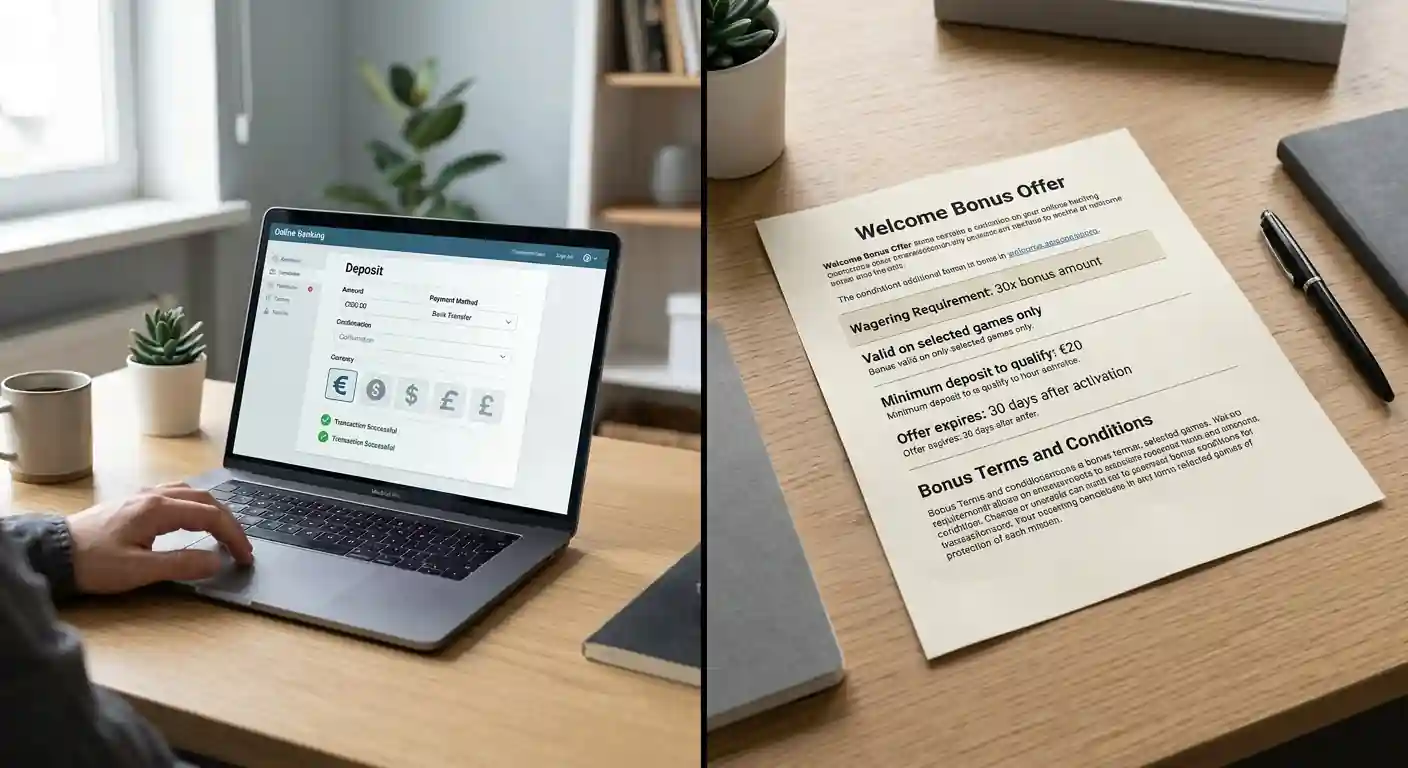
The terms sound close enough to blend together in a search results page, and operators lean into that confusion hard. A no minimum deposit casino is one that accepts your money with no floor on the amount—A$5, A$10, maybe A$1 if you’re lucky. You deposit, you play with your own cash, you keep what you win minus the wagering rules and withdrawal caps. A no deposit bonus casino gives you free spins or a small chip without asking for a deposit first, but the “free” part comes with conditions that make most winnings unreachable: 40x to 60x wagering, max cashout caps at A$50 or A$100, expiry windows under 24 hours, and a mandatory deposit before you can withdraw anything anyway.
One is a threshold question. The other is a promotional gimmick dressed as a threshold question. The confusion exists because review sites list both types under the same “no minimum deposit” header, hoping the click-through happens before the distinction registers. If you came here looking for casinos where you can deposit small amounts of your own money and play without a bonus complicating things, the operators in the next section are what you’re after. If you want free spins that expire before you meet the playthrough, the no-deposit-bonus sites are easy to find—just not particularly useful unless you treat them as a 20-minute demo with no real expectation of cashing out.
Is there a difference between a no minimum deposit casino and a no deposit bonus casino?
Yes. A no minimum deposit casino accepts small real-money deposits (A$5 to A$20 typically) with no promotional strings—you deposit, play, and withdraw what you win, subject to standard withdrawal minimums and KYC checks. A no deposit bonus casino gives you free spins or a bonus chip without a deposit, but winnings are capped (often A$50–A$100), wagering requirements are high (40x to 60x), and you’ll need to deposit later to withdraw anything. The first lets you play with your money at a low entry point; the second is a time-limited promo with heavy restrictions. Confusing the two is common because both appear in “no minimum” search results, but the practical experience is entirely different.
Australian Online Casinos with the Lowest Deposit Minimums (2026)
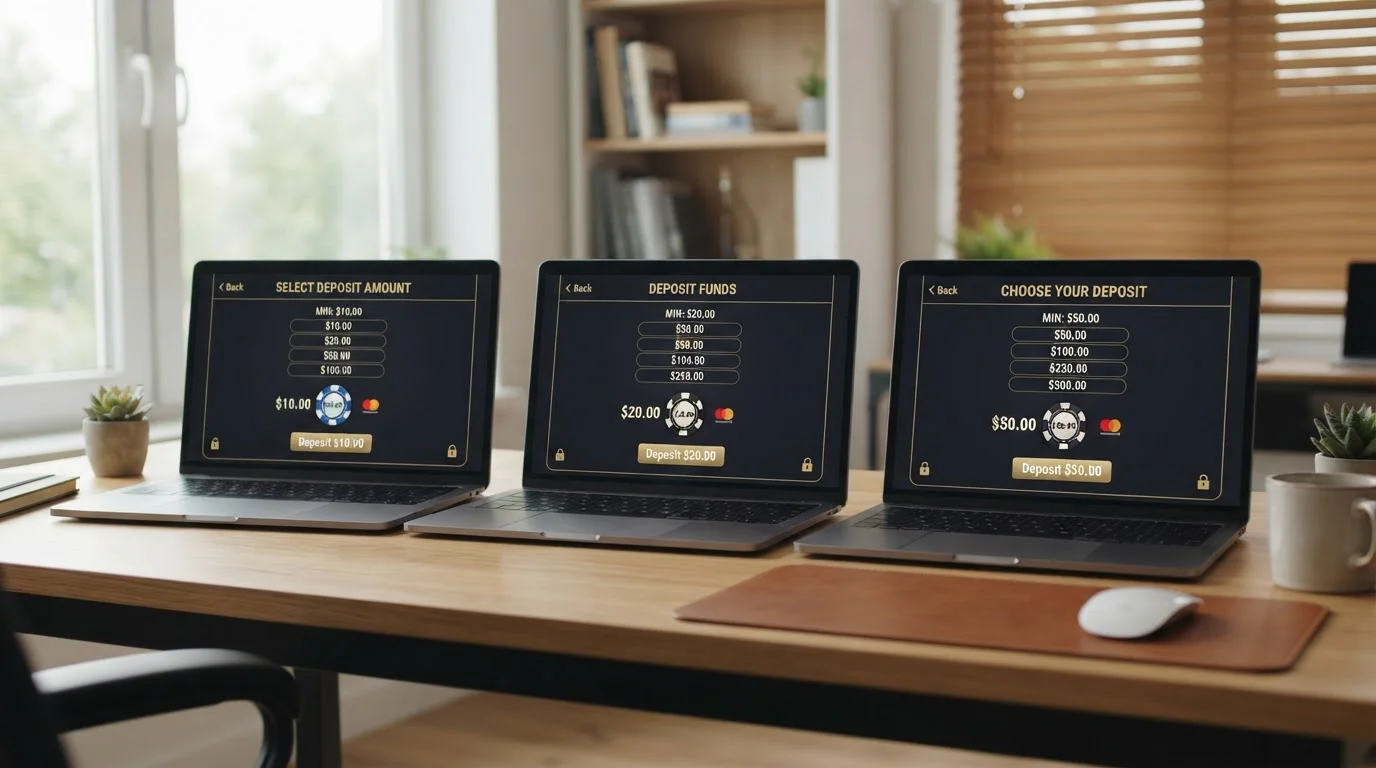
The claim “no minimum deposit” rarely survives contact with a cashier page. Below is what the Australian-facing offshore market actually offers in 2026, tiered by the real minimum you’ll hit when you try to fund an account. Payment method matters—PayID and crypto often allow the lowest thresholds, cards and e-wallets typically sit at A$10 or higher, and some methods won’t process transactions under A$20 regardless of what the casino advertises. Withdrawal minimums sit separately and often higher, which creates a trap: deposit A$5, win A$12, discover you can’t withdraw anything under A$20. That dynamic is covered in a later section; here the focus is purely on deposit entry points.
Every operator below runs on an offshore license—Curaçao in most cases, Malta in a few. None hold Australian licenses because ACMA doesn’t issue them. The Interactive Gambling Act prohibits offering online casino services to people in Australia, which is why every brand here operates from outside the country and why you won’t find a locally regulated whitelist to cross-check. Consumer protection is limited to whatever the foreign regulator enforces, which in Curaçao’s case is minimal. That’s the structural reality of the Australian online casino market in 2026, not a defect of any single operator.
Which online casinos accepting Australian players in 2026 have no minimum deposit requirement?
No Australian-facing casino in 2026 has a true zero-threshold deposit policy across all payment methods. The lowest verified minimums are A$5 (OnlyWin Casino for non-bonus deposits, some crypto-only operators), A$10 (HellSpin, Lucky7Even via PayID), and A$20 (Bizzo, BaxterBet, Playfina, Casabet). Most operators claiming “no minimum” actually enforce A$10 to A$30 minimums depending on payment method and whether you’re activating a welcome bonus. The confusion arises because bonus-eligibility thresholds (often A$20–A$30) differ from general deposit minimums (often A$5–A$10), and marketing headlines rarely distinguish the two.
| Casino | Minimum Deposit | License | Withdrawal Speed | Payment Methods | Distinguishing Feature |
|---|---|---|---|---|---|
| OnlyWin Casino | A$5 (non-bonus), A$12 (general), A$30 (bonus) | Curaçao (Goodfly N.V.) | Crypto: hours; e-wallet/card: 12–24h | Visa, Mastercard, Skrill, Neteller, Neosurf, MiFinity, BTC, ETH, LTC, DOGE, USDT | 8,000+ games, 20-tier VIP program, AUD-native banking |
| HellSpin Casino | A$10 | Curaçao | E-wallet: 0–24h; cards: 3–5 days | Visa, Mastercard, Skrill, Neteller, PayID (if available), bank transfer, BTC, ETH, LTC | A$10,000 + 500 spins welcome, 3,200+ games, PayID support |
| Lucky7Even | A$10 (PayID verified) | Curaçao | Standard offshore | PayID, Visa, Mastercard, e-wallets | A$3,000 + 200 spins, 6,000+ games, PayID A$10 minimum verified by testers |
| Fair Go Casino | A$10 (cashier), A$20 (bonus) | Curaçao | Standard offshore | Neosurf, CashToCode, cards, crypto | A$1,000 welcome (5 deposits), RTG games, long-established AU brand |
| Bizzo Casino | A$20 | Curaçao | Standard offshore | Visa, Mastercard, e-wallets, crypto | 100% up to A$750, 6,000+ games |
| BaxterBet Casino | A$20 | Curaçao | Standard offshore | Visa, Mastercard, e-wallets, crypto | Casino + sportsbook, 100% up to A$1,500 + 250 spins, 4,500+ games |
| Playfina Casino | A$20 | Curaçao | Standard offshore | Visa, Mastercard, e-wallets | 50% up to A$500 + 200 spins (third deposit), loyalty program |
| Casabet Casino | A$20 | Curaçao | Standard offshore | Visa, Mastercard, e-wallets, crypto | 9,000+ games, weekly cashback 10%–35%, Telegram offers |
| Boho Casino | A$30 | Curaçao | Standard offshore | Visa, Mastercard, e-wallets, crypto | High roller bonus, VIP program, 4,000+ games |
| Rolling Slots Casino | A$30 | Curaçao | Standard offshore | Visa, Mastercard, e-wallets, crypto | 310% up to A$6,400 + 570 spins, 5,000+ games |
| RocketPlay Casino | A$100 (crypto focus) | Curaçao | Crypto: fast; others: standard | Crypto (BTC, ETH, LTC), e-wallets, cards | Highroller 50% bonus, 5,000+ games, crypto-first platform |
| Malina Casino | A$100 | Curaçao | Standard offshore | Crypto, e-wallets, cards | Casino + sportsbook, 6,500+ games, sport welcome 100% up to A$150 |
HellSpin Casino — A$10 Minimum Deposit
HellSpin runs on a Curaçao license and accepts Australian players with a flat A$10 minimum deposit across Visa, Mastercard, Skrill, Neteller, PayID where available, and bank transfers. Crypto deposits (Bitcoin, Ethereum, Litecoin) start at roughly A$20 equivalent depending on exchange rates and network fees. The welcome package scales to A$10,000 plus 500 free spins, which is large by offshore standards, but the deposit minimum doesn’t budge regardless of whether you activate the bonus. Minimum withdrawal is A$20 for e-wallets and crypto, A$50 for bank transfers, which creates a gap: deposit A$10, win A$15, and you’re A$5 short of a cashout.
The game library sits at 3,200-plus titles from providers like Pragmatic Play, NetEnt, and Evolution. E-wallet withdrawals process within 24 hours after KYC approval; cards take three to five business days. HellSpin doesn’t charge deposit or withdrawal fees on its end, but third-party processors and banks may add their own cuts, especially for international card transactions. PayID availability varies—some Australian players report seamless A$10 PayID deposits, others find the method unavailable in the cashier. That inconsistency is common at offshore brands where payment processor partnerships shift without notice.
OnlyWin Casino — A$5 to A$12 Minimum Deposit
OnlyWin launched in 2023 under Goodfly N.V., a Curaçao-licensed operator, and built its Australian presence on tiered deposit minimums: A$5 for non-bonus deposits, A$12 for general account funding, A$30 if you want to trigger the welcome package. That A$5 floor is one of the lowest verified minimums in the Australian offshore market, but it comes with a catch—deposit A$5 and you’re playing without a bonus, which for some players is the point. The four-deposit welcome package scales to A$3,500 plus 210 free spins, but only deposits of A$30 or higher unlock it.
The game library runs deep: 8,000-plus titles from 116 providers, including Pragmatic Play, NetEnt, Evolution, Microgaming, Yggdrasil, and Play’n GO. A 20-tier VIP program offers cashback up to 20 percent, and the platform handles AUD natively, so there’s no currency conversion on deposit or withdrawal. Payment methods include Visa, Mastercard, Skrill, Neteller, Neosurf, MiFinity, and five cryptocurrencies (Bitcoin, Ethereum, Litecoin, Dogecoin, Tether). Crypto withdrawals process in hours; e-wallet and card payouts take 12 to 24 hours after approval. Withdrawal limits sit at A$4,100 daily and A$50,000 monthly, higher than many competitors.
OnlyWin’s A$5 non-bonus minimum is the closest thing to a true micro-deposit threshold in the current Australian offshore market. Whether it’s worth depositing that small depends entirely on whether A$5 buys enough spins to see a bonus round—on low-stakes pokies like Starburst or Book of Dead at A$0.01 per line, it does. On anything higher-variance or higher-stakes, it doesn’t.
Lucky7Even — A$10 Minimum Deposit (PayID Verified)
Lucky7Even accepts Australian players with a verified A$10 minimum deposit via PayID, confirmed by independent testers who funded accounts and checked cashier limits in real time. That makes it one of the few offshore brands where the PayID floor is both advertised and accurate. The welcome bonus scales to A$3,000 plus 200 free spins, and the A$10 deposit threshold applies whether you activate the bonus or not. The game library runs north of 6,000 titles, heavy on Pragmatic Play and NetEnt pokies, with a typical offshore mix of slots, live dealer tables, and a smattering of video poker.
The platform runs on a Curaçao license, standard for Australian-facing operators. PayID deposits credit instantly in most cases—under 60 seconds—which is faster than card transactions that occasionally trigger fraud holds or foreign-transaction flags on the Australian bank side. Withdrawal times and limits weren’t disclosed in available sources, which is common for mid-tier offshore brands that don’t publish full terms publicly. KYC verification is required before first withdrawal, also standard.
Lucky7Even’s main appeal is the PayID verification: if you want to deposit A$10 via Australia’s instant bank transfer system and you want confirmation that it’ll work before you register, this is one of the few brands where testers documented it functioning at the advertised minimum. That doesn’t make it “better” than competitors with the same threshold, just more transparent about what actually happens at the cashier.
Fair Go Casino — A$10 to A$20 Minimum Deposit
Fair Go has operated in the Australian offshore market long enough to have a reputation that predates most of its competitors. The casino runs on a Curaçao license and focuses on RTG (Realtime Gaming) pokies, which makes it an outlier—most Australian-facing brands lean on Pragmatic Play, NetEnt, and Microgaming. The minimum deposit sits at A$10 for general cashier transactions and A$20 for welcome-bonus eligibility. That split is typical: the floor for getting money into the account is lower than the floor for activating promotional offers.
The welcome package totals A$1,000 across five deposits, structured as 100 percent up to A$200 per deposit with a A$20 minimum each time. Wagering requirements run at 30x deposit plus bonus, which puts a A$100 deposit plus A$100 bonus at a A$6,000 playthrough target. Payment methods include Neosurf, CashToCode, cards, and crypto. Free spins promotions occasionally surface—20 spins on Megaquarium with code MEGA20, for example, capped at A$200 max cashout and carrying 60x wagering on winnings.
Fair Go’s RTG library is its distinguishing feature. If you grew up on Cash Bandits and Achilles pokies and the NetEnt catalogue feels generic, this is the offshore brand that still runs them. If you don’t care about provider nostalgia, the game library is smaller and older than competitors offering 5,000-plus NetEnt and Pragmatic titles. The A$10 cashier minimum is real; the A$20 bonus threshold is also real. Confusing the two is easy when the promotional page leads with “A$1,000 welcome bonus” and buries the per-deposit minimum three paragraphs down.
Bizzo Casino — A$20 Minimum Deposit
Bizzo operates under a Curaçao license and sets a flat A$20 minimum deposit across all payment methods. The welcome bonus runs 100 percent up to A$750, and the A$20 threshold applies whether you activate it or not. The game library sits at 6,000-plus titles from the usual offshore provider mix: Pragmatic Play, NetEnt, Microgaming, Play’n GO, Evolution for live dealer. A$10 no-deposit bonus offer occasionally surfaces in promotional cycles—free chip, 40x wagering, A$100 max cashout, standard terms—but that’s a bonus-only promo, not a deposit minimum.
Payment methods include Visa, Mastercard, Skrill, Neteller, and cryptocurrencies. Withdrawal minimums and processing times weren’t disclosed in available sources, which is typical for mid-tier offshore brands that don’t make their full terms easily searchable. KYC is required at first withdrawal. The platform handles AUD natively, so there’s no currency conversion hit on deposit or cashout.
Bizzo’s A$20 minimum sits in the middle tier of the Australian offshore market—not the lowest (that’s A$5 to A$10), not high enough to qualify as a deliberate highroller filter (that’s A$100-plus). It’s the default floor most operators land on when they want to avoid payment processor complications that come with sub-A$20 transactions while still keeping the entry point accessible to casual players. If you’re looking for the absolute lowest threshold, this isn’t it. If A$20 is within your budget and you want a larger game library than the A$10-minimum brands offer, it’s competitive.
BaxterBet Casino — A$20 Minimum Deposit
BaxterBet runs on a Curaçao license and splits its platform between casino games and sports betting markets, which makes it a hybrid rather than a pure casino operator. The minimum deposit is A$20 across payment methods, and the welcome package scales to 100 percent up to A$1,500 plus 250 free spins. The game library sits at 4,500-plus titles, smaller than pure-casino competitors but still covering the standard pokie, live dealer, and table-game categories. Quick sign-up via Gmail is available, and a mobile app runs on both Android and iOS.
The sportsbook component is the distinguishing feature here. If you want to deposit A$20 and split it between a pokie session and a weekend rugby bet, BaxterBet lets you do that without switching platforms. If you’re only interested in casino games, the sports side is irrelevant, and the game library is narrower than competitors like Casabet (9,000-plus games) or OnlyWin (8,000-plus) at similar or lower deposit minimums.
Payment methods include Visa, Mastercard, e-wallets, and crypto. Withdrawal times and KYC requirements follow standard offshore practice: identity verification required before first cashout, processing times vary by method. The A$20 minimum deposit is fixed—no lower tier for non-bonus deposits like OnlyWin offers, no PayID-specific threshold like Lucky7Even. Straightforward, mid-tier, functional if you want both casino and sportsbook access from one cashier.
Playfina Casino — A$20 Minimum Deposit
Playfina operates under a Curaçao license with a A$20 minimum deposit and a welcome structure that defers the largest bonus to the third deposit: 50 percent up to A$500 plus 200 free spins. That’s unusual—most offshore operators front-load the welcome package on the first deposit to maximise registration conversions. Playfina’s approach spreads value across multiple sessions, which works better for players who stick around and worse for those testing a brand with a single small deposit.
The game library size wasn’t fully disclosed in available sources—one listing noted “50-plus games,” which is almost certainly an undercount given that even small offshore casinos run 1,000-plus titles in 2026. A loyalty program and progressive jackpots are available, standard features for Curaçao-licensed operators targeting long-term player retention. Payment methods include Visa, Mastercard, and e-wallets; crypto availability wasn’t confirmed.
Playfina’s A$20 minimum is middle-of-the-pack for the Australian offshore market. The third-deposit bonus structure is atypical and worth noting if you’re comparing welcome packages—deposit A$20 twice without hitting the main bonus, then A$20 a third time to unlock the A$500 match. That’s either a loyalty reward or a frustration mechanic depending on whether you were planning to deposit three times anyway.
Casabet Casino — A$20 Minimum Deposit
Casabet runs on a Curaçao license with a A$20 minimum deposit and one of the largest game libraries in the Australian offshore market: 9,000-plus titles. Weekly cashback scales from 10 to 35 percent depending on activity level, and the platform offers Telegram-based promotional codes, which is uncommon—most operators stick to email and SMS for bonus distribution. Fast sign-up is advertised, though “fast” in this context usually means a registration form that takes two minutes instead of five.
The 9,000-game figure is the distinguishing feature here. Most offshore casinos serving Australians run 3,000 to 6,000 titles; Casabet’s library is materially larger. Whether that translates to better variety or just more cloned pokies with palette-swapped themes depends on the provider mix, which wasn’t fully disclosed in sources. Pragmatic Play, NetEnt, and Microgaming are standard; beyond that it’s a question of whether you’ll find niche studios like Yggdrasil, Red Tiger, or Thunderkick in the catalogue.
Payment methods include Visa, Mastercard, e-wallets, and crypto. Withdrawal minimums and processing times weren’t detailed in available sources. The Telegram promo channel is worth checking if you’re registering—some offshore brands bury their best bonus codes there instead of publishing them on the main site, a tactic that rewards engaged players and filters out casual browsers who won’t chase down a messaging-app link.
Boho Casino — A$30 Minimum Deposit
Boho operates under a Curaçao license with a A$30 minimum deposit, which sits at the higher end of the “low minimum” tier before crossing into the A$100-plus highroller zone. The welcome package includes a high roller bonus option, which typically means a lower match percentage (50 to 100 percent) on deposits of A$100 or more, aimed at players who fund accounts in larger chunks. A VIP and loyalty program runs alongside the standard promotional calendar. The game library sits at 4,000-plus titles, and a one-step sign-up process is advertised—likely a simplified registration form that collects fewer fields upfront and defers full KYC to the first withdrawal.
A reload bonus of 50 free spins is available, no deposit required for the spins themselves but likely gated behind a previous qualifying deposit to unlock access. Payment methods include Visa, Mastercard, e-wallets, and crypto. Withdrawal times and limits weren’t disclosed in available sources.
Boho’s A$30 minimum is higher than the A$10 to A$20 tier most Australian-facing operators target, but still low enough to avoid being a deliberate highroller filter. The high roller bonus structure suggests the platform expects a mix of small and large deposits and built its promotional calendar around both. If you’re specifically looking for the lowest possible entry point, A$30 is not it—OnlyWin’s A$5 or HellSpin’s A$10 beat it. If A$30 fits your session budget and the high roller bonus structure interests you, it’s competitive within its tier.
Rolling Slots Casino — A$30 Minimum Deposit
Rolling Slots runs on a Curaçao license with a A$30 minimum deposit and a front-loaded welcome package: 310 percent up to A$6,400 plus 570 free spins. That percentage is unusually high—most offshore operators cap welcome matches at 100 to 150 percent—but the A$6,400 ceiling spreads across multiple deposits, not a single A$30 transaction. The game library sits at 5,000-plus titles from standard offshore providers. Payment methods include cards, crypto, and e-wallets.
The 310 percent match is the headline, but the structure matters more. If the package spreads across four deposits, that’s roughly A$1,600 per deposit to max out the bonus, which puts the target player well above the A$30 minimum-deposit profile. The A$30 floor exists to keep the entry point accessible, but the real promotional value is aimed at players depositing A$100-plus per session. That’s not deceptive, just typical—offshore welcome packages are built to scale, and the headline figure assumes you’ll deposit repeatedly at higher amounts.
Rolling Slots’ A$30 minimum sits in the same tier as Boho. If you’re comparing the two, the deciding factor is likely the welcome structure: Rolling Slots front-loads a high-percentage match, Boho offers a high roller option. The game libraries and payment methods are similar enough that neither has a material edge on features.
RocketPlay Casino — A$100 Minimum Deposit (Crypto Focus)
RocketPlay operates under a Curaçao license with a A$100 minimum deposit, the highest floor in this comparison. The platform markets itself as crypto-friendly, which in practice means the payment processor partnerships prioritise Bitcoin, Ethereum, and Litecoin over cards and e-wallets. The minimum deposit likely reflects the transaction economics of crypto—network fees and exchange-rate volatility make sub-A$100 deposits less practical for both operator and player. A highroller bonus structure offers 50 percent after two deposits, aimed at players funding accounts in the A$200-plus range.
The game library sits at 5,000-plus titles, standard for mid-tier offshore operators. Payment methods include crypto (priority), e-wallets, and cards. Withdrawal processing for crypto is typically faster than fiat methods—hours instead of days—but depends on blockchain congestion and the casino’s internal approval queue.
RocketPlay’s A$100 minimum makes it an outlier in a guide focused on low-threshold deposits. It’s here for completeness and to illustrate the range: if you’re looking for a A$5 or A$10 entry point, this isn’t it. If you’re a crypto user comfortable depositing A$100 or more and you want faster withdrawals than card-based casinos offer, RocketPlay’s structure aligns with that use case. The highroller bonus is irrelevant at the minimum deposit—50 percent of A$100 is A$50, useful but not the value driver the promo targets.
Malina Casino — A$100 Minimum Deposit (Sport + Casino)
Malina runs on a Curaçao license with a A$100 minimum deposit and a hybrid platform combining casino games and sports betting. The sport welcome bonus runs 100 percent up to A$150, separate from the casino welcome structure. The game library sits at 6,500-plus titles, larger than most hybrid platforms where the sportsbook competes for development resources. Crypto payments are supported alongside cards and e-wallets. A loyalty program is available, standard for operators targeting retention over one-time players.
The A$100 minimum deposit is high for a “low minimum deposit” guide, but Malina appears here for the same reason as RocketPlay: to show the upper boundary of what offshore operators consider accessible. If you’re specifically hunting for A$10 thresholds, Malina isn’t competitive. If you’re a sports bettor who also plays pokies and you’re comfortable with A$100 deposits, the hybrid structure consolidates your bankroll in one place instead of splitting it across separate casino and sportsbook accounts.
The 6,500-game library is the practical differentiator here. Most casino-sportsbook hybrids sacrifice game variety to keep both sides functional; Malina’s catalogue is deeper than pure-casino competitors like HellSpin (3,200 games) or Fair Go (RTG-only). Whether that variety matters depends on how much time you spend browsing the lobby versus returning to the same handful of pokies every session.
What is the lowest deposit amount I can make at an Australian online casino in 2026?
The lowest verified deposit minimum at an Australian-facing offshore casino in 2026 is A$5 at OnlyWin Casino for non-bonus deposits. Most operators claiming “no minimum” actually enforce A$10 (HellSpin, Lucky7Even), A$20 (Bizzo, BaxterBet, Playfina, Casabet), A$30 (Boho, Rolling Slots), or A$100 (RocketPlay, Malina). The threshold varies by payment method: crypto and PayID often allow the lowest minimums, cards typically start at A$10, and some e-wallets won’t process transactions under A$20. Bonus-eligibility minimums run higher than general deposit minimums—OnlyWin’s A$5 floor rises to A$30 if you want the welcome package, for example. True zero-minimum deposits don’t exist at reputable offshore brands in 2026; A$5 is as close as the market gets.
Payment Methods That Support Micro-Deposits at Australian Casinos
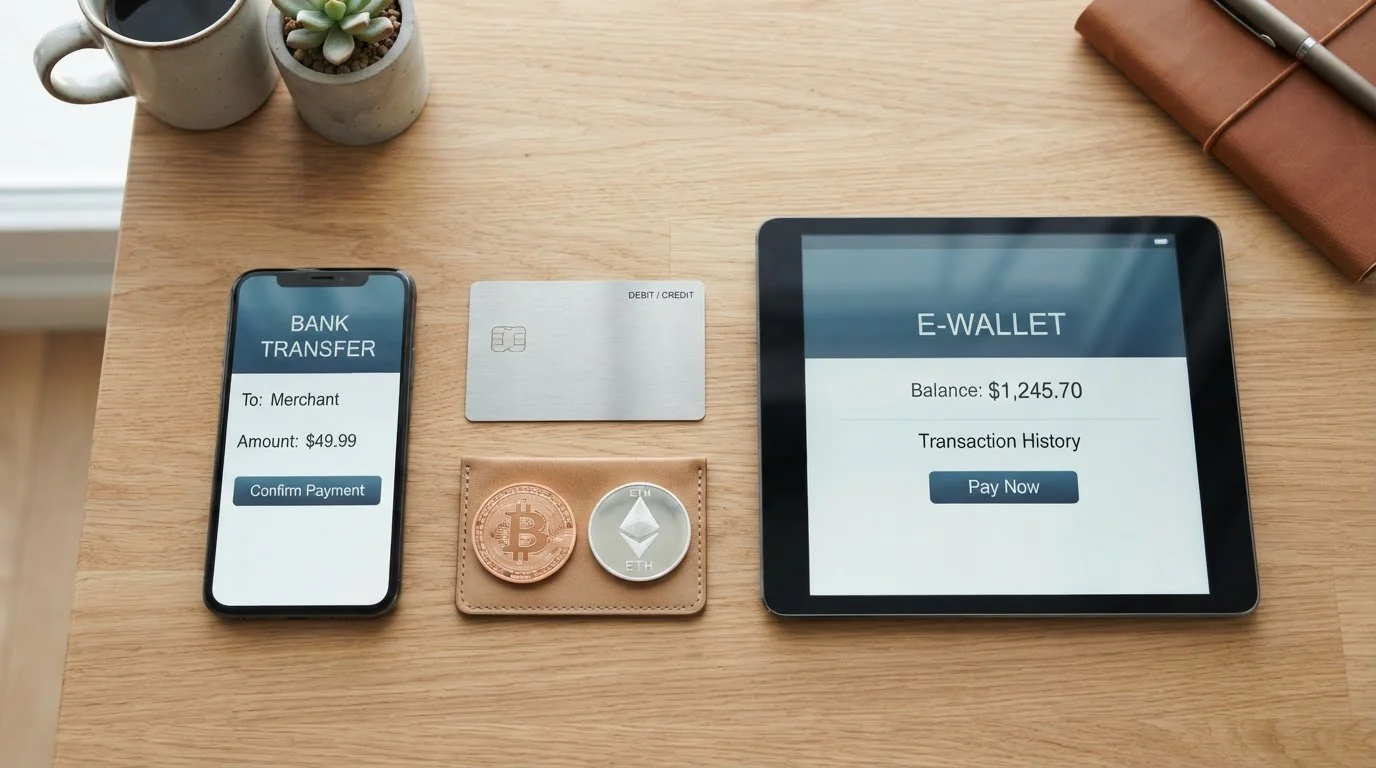
Deposit minimums don’t exist in a vacuum—they’re enforced by payment processors, not casinos. An offshore operator might advertise a A$5 floor, but if Visa’s acquiring bank won’t process gambling transactions under A$10, the cashier will reject your A$5 card deposit and tell you to try a different method. PayID, crypto, and e-wallets each have different floors based on their transaction economics, fraud-risk models, and regulatory overhead. Cards sit somewhere in the middle, complicated by the fact that Australian banks treat offshore gambling transactions as international purchases, which sometimes triggers foreign-transaction fees or outright blocks regardless of the amount.
The table below breaks down typical minimums by method, but “typical” is doing heavy lifting—actual limits vary by casino, by payment processor partnership, and sometimes by the phase of the moon. One offshore brand’s PayID integration might accept A$5 deposits; another’s might enforce A$20 because their processor’s contract has a different fee structure. Crypto minimums fluctuate with network fees: a A$10 Bitcoin deposit makes sense when the mempool is clear and fees are under a dollar, less so when congestion pushes fees to A$5 or more.
| Payment Method | Typical Minimum Deposit | Processing Speed | Fees | Availability at AU Casinos |
|---|---|---|---|---|
| PayID | A$10 | Instant (under 60 seconds) | None from casino; bank may charge for international transfers | Growing but inconsistent; larger brands support it, smaller operators may not |
| Cryptocurrency (BTC, ETH, LTC) | A$10–A$20 equivalent | Network-dependent (minutes to hours) | Network fees (variable, A$0.50–A$5+); no casino fees | Widely supported at crypto-friendly operators; less common at card-focused brands |
| E-Wallets (Skrill, Neteller, MiFinity) | A$10 | Instant | None from casino; e-wallet may charge currency conversion or withdrawal fees | Widely supported; Skrill and Neteller near-universal, MiFinity less common |
| Credit/Debit Cards (Visa, Mastercard) | A$10–A$20 | Instant (occasionally delayed by fraud holds) | Australian banks may charge foreign transaction fees (1–3%); casino fees rare | Universal; every offshore brand accepts cards |
| Neosurf, Paysafecard (vouchers) | A$10+ | Instant | None from casino; voucher face value purchased at retail with retail markup | Common at RTG-focused casinos (Fair Go, Red Stag); less common at NetEnt/Pragmatic brands |
PayID — Australia’s Instant Bank Transfer (A$10 Minimum Standard)
PayID is Australia’s instant bank transfer system, built on the New Payments Platform and supported by all major Australian banks. You link a mobile number or email to your bank account, give the casino that identifier, and funds move bank-to-bank in under 60 seconds. No card details shared, no third-party e-wallet signup, no foreign-transaction fees from the Australian bank side because the transaction technically starts as a domestic transfer. The catch is offshore casinos route PayID deposits through payment processors that sit between you and the casino’s merchant account, and those processors enforce their own minimums.
A$10 is the standard PayID minimum at most offshore casinos accepting the method in 2026. HellSpin lists it at A$10 where available; Lucky7Even’s A$10 minimum is confirmed by testers; OnlyWin’s general A$12 minimum applies across all methods including PayID. The “where available” qualifier matters—PayID support at offshore brands is inconsistent. Some Australian players report seeing PayID in the cashier, others don’t, and the difference often comes down to payment processor partnerships that shift without public notice. If PayID appears as an option when you log in, it’ll likely work at the advertised minimum. If it doesn’t appear, the casino’s processor doesn’t support it yet, and you’ll need to fall back to cards or e-wallets.
PayID deposits under A$10 are technically possible—the NPP doesn’t enforce a floor—but no major offshore casino offers it. The A$10 threshold reflects processor economics: transaction fees, fraud-risk reserves, and compliance overhead don’t scale down efficiently below A$10, so processors set that as the minimum they’ll route. If you’re specifically looking for sub-A$10 deposits, crypto is the more reliable option.
Does PayID work for deposits under $10 at Australian casinos?
No. The lowest verified PayID minimum at Australian-facing offshore casinos in 2026 is A$10 (HellSpin, Lucky7Even). While PayID itself—Australia’s instant bank transfer system via the New Payments Platform—doesn’t enforce a minimum transaction amount, offshore casino payment processors set their own floors, typically A$10 to A$20. Processors impose minimums to cover transaction fees, fraud-risk reserves, and compliance costs, which don’t scale efficiently below A$10. OnlyWin Casino accepts A$5 deposits for non-bonus transactions, but that threshold applies across all payment methods and hasn’t been confirmed as PayID-specific. If you need to deposit under A$10, cryptocurrency (Bitcoin, Litecoin) is more likely to support micro-transactions, though network fees can erase savings on very small amounts.
Cryptocurrency — Bitcoin, Ethereum, Litecoin (Variable Minimums)
Crypto deposits at offshore casinos typically start at A$10 to A$20 equivalent, but the “equivalent” part is load-bearing. You’re depositing Bitcoin or Litecoin, the casino’s system converts it to AUD or USD at the current exchange rate, and the minimum is enforced in fiat terms. If Bitcoin’s price drops 5 percent between the time you initiate the transaction and the time the casino’s processor confirms it, your A$20 deposit might land as A$19 and get rejected. Network fees add another variable: send A$10 worth of Bitcoin during peak congestion and A$3 to A$5 might go to miners, leaving A$5 to A$7 credited to your casino balance.
OnlyWin, RocketPlay, Malina, and most Curaçao-licensed operators accept Bitcoin, Ethereum, and Litecoin. Processing speed depends on blockchain congestion—Litecoin confirmations take minutes, Bitcoin can take an hour or more during busy periods, Ethereum sits somewhere in between. Crypto withdrawals process faster than fiat methods once the casino approves them (hours instead of days), but the approval queue itself is the same: KYC verification required, internal review times vary.
Crypto’s advantage for micro-deposits is that payment processors don’t sit between you and the casino. You send coins directly to a wallet address the casino controls, which removes the third-party minimum enforcement that PayID and cards deal with. The disadvantage is exchange-rate volatility and network fees can make A$10 deposits impractical during congestion. If you’re comfortable with crypto and you’re depositing A$20 or more, it’s often the fastest and cheapest method. If you’re trying to deposit A$5, the fees and volatility make it uncompetitive with PayID or e-wallets.
Which payment methods support the lowest deposit amounts at Australian online casinos?
Cryptocurrency (Bitcoin, Litecoin) and PayID support the lowest consistent deposit minimums at Australian-facing offshore casinos in 2026, typically A$10. OnlyWin Casino’s A$5 non-bonus minimum applies across all payment methods, making it the lowest verified floor regardless of method. Credit and debit cards (Visa, Mastercard) typically enforce A$10 to A$20 minimums, with some Australian banks adding foreign transaction fees (1–3 percent) because offshore gambling transactions are processed as international purchases. E-wallets (Skrill, Neteller, MiFinity) generally match the A$10 floor but avoid foreign-transaction fees since the e-wallet handles currency conversion. Voucher methods (Neosurf, Paysafecard) start at A$10-plus and are sold in fixed denominations at retail, making them less flexible for micro-deposits.
E-Wallets — Skrill, Neteller, MiFinity (A$10 Minimum Standard)
Skrill, Neteller, and MiFinity are third-party e-wallets that sit between your bank and the casino. You load the e-wallet with AUD via bank transfer or card, then deposit from the e-wallet to the casino. The two-step process adds friction but removes some of the payment-processor complications that affect direct card or PayID deposits—e-wallets are designed for gambling transactions, so they don’t trigger the foreign-transaction flags or fraud holds that Australian banks sometimes apply to offshore casino card payments.
A$10 is the standard minimum for e-wallet deposits at offshore casinos. HellSpin lists Skrill and Neteller at A$10, OnlyWin supports all three at its A$12 general minimum, and most other operators fall in the A$10 to A$20 range. E-wallet deposits credit instantly once you’ve loaded the wallet—no waiting for bank clearing or blockchain confirmations. Withdrawals to e-wallets are faster than card or bank transfer payouts (typically 24 hours after casino approval), which makes them the preferred method for players who cycle funds in and out frequently.
Fees vary by e-wallet and by how you load it. Skrill and Neteller charge currency conversion fees if your bank account is in AUD and the e-wallet holds USD or EUR; MiFinity supports AUD natively, avoiding that hit. Withdrawal fees from the e-wallet back to your bank account apply, usually a percentage or flat fee depending on the amount. E-wallets are reliable and fast but not cheaper than PayID or crypto—the convenience of bypassing bank restrictions is the trade-off for the extra fee layer.
Credit and Debit Cards — Visa, Mastercard (A$10–A$20 Minimums)
Visa and Mastercard are the default payment methods at every offshore casino serving Australians. Minimum deposits typically run A$10 to A$20, though some operators like OnlyWin enforce A$12 and others like Bizzo or BaxterBet sit at A$20 flat. Cards are convenient—you don’t need to sign up for an e-wallet or set up PayID or buy crypto—but Australian banks treat offshore gambling transactions as international purchases, which introduces friction. Some banks block the transaction outright under responsible-gambling or anti-fraud policies. Others allow it but charge a foreign-transaction fee, typically 1 to 3 percent, which turns a A$10 deposit into A$10.30 at settlement.
Card deposits credit instantly in most cases, but fraud holds occasionally delay processing by hours or days. The offshore casino’s payment processor flags the transaction as higher-risk (gambling, international merchant, first-time card), the processor pings your bank for additional verification, your bank texts you a one-time code, and the deposit clears once you confirm. That friction is rare but common enough that players keeping a Skrill or Neteller account loaded see it as worth the hassle to avoid card holds.
Withdrawal to cards takes longer than e-wallets or crypto—three to five business days after the casino approves the payout. Some offshore processors don’t support card withdrawals at all, forcing you to cash out via bank transfer or e-wallet even if you deposited by card. That asymmetry is common at Curaçao-licensed operators where payment processor contracts prioritise deposit volume over payout flexibility.
Neosurf and Voucher Methods (A$10+ Minimums)
Neosurf and Paysafecard are prepaid vouchers sold at retail—service stations, newsagents, convenience stores. You buy a voucher with a fixed face value (A$10, A$25, A$50, A$100), scratch off the code, enter it in the casino cashier, and the amount credits to your account. No bank details shared, no card trail, which appeals to players who want to keep gambling transactions off their bank statements. The downside is vouchers are deposit-only—you can’t withdraw to a Neosurf code—so you’ll need to set up a bank transfer or e-wallet for cashouts.
A$10 is the typical minimum voucher denomination, and casinos that accept Neosurf (Fair Go, Red Stag, others with RTG libraries) generally set their deposit floor at the voucher’s face value. Vouchers credit instantly once you enter the code. Fees are hidden in the retail purchase: the voucher might have a A$10 face value, but you pay A$10.50 or A$11 at the register depending on the retailer’s markup. That’s not a casino fee or a processor fee, just the cost of buying the voucher.
Voucher availability at offshore casinos is inconsistent. RTG-focused brands like Fair Go commonly accept Neosurf; NetEnt and Pragmatic-heavy operators are less likely to support it. If you’re specifically looking for voucher deposits because you want to avoid linking a bank account or card to an offshore casino, check the cashier before registering—voucher support isn’t universal, and finding out after you’ve bought a A$50 Neosurf card that the casino doesn’t accept it is frustrating.
Playing Pokies and Slots with Micro-Deposits
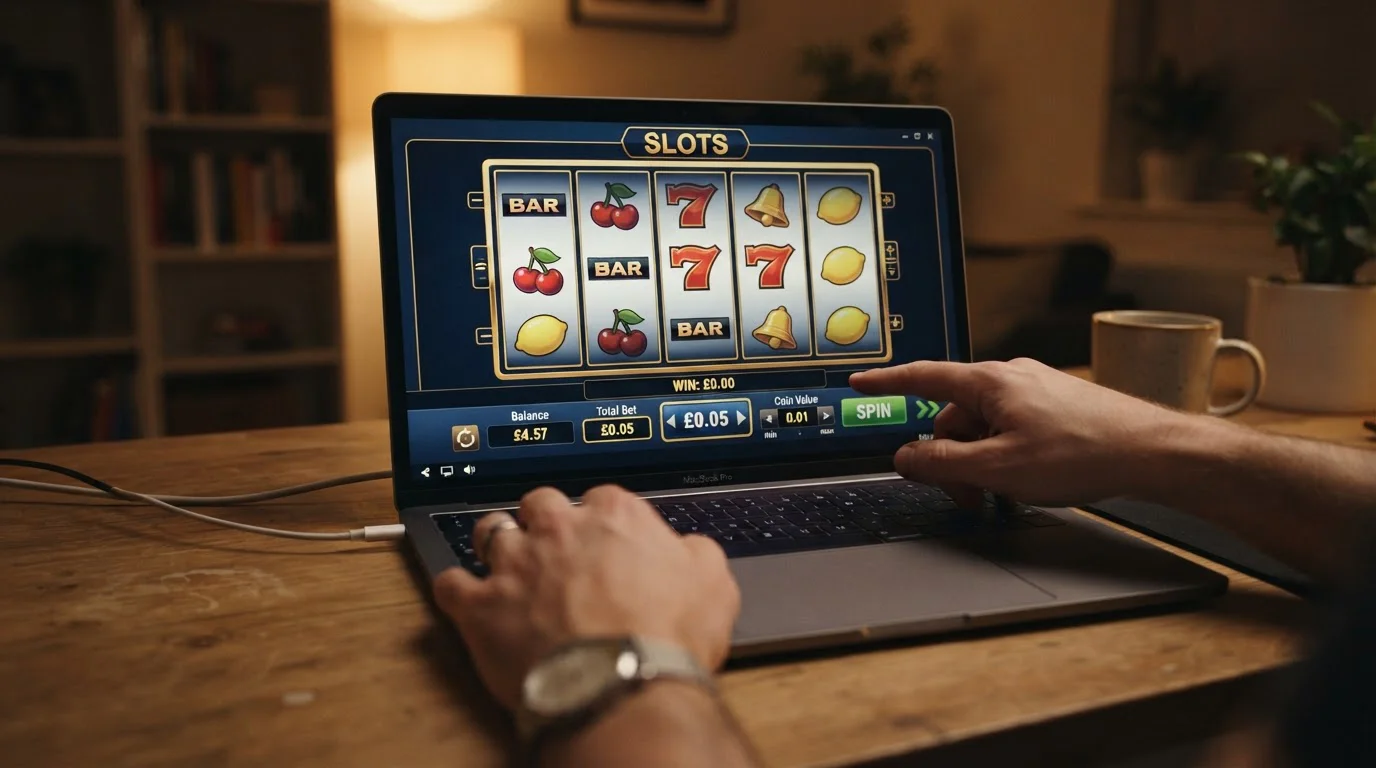
Deposit A$5 or A$10 at an offshore casino and the question becomes: how many spins does that buy, and is it enough to hit a bonus round before the balance drains? The answer depends on the pokie’s minimum bet, its volatility, and whether you’re playing for a realistic shot at a payout or just burning time. Low-volatility pokies like Starburst let you set bets at A$0.10 per spin or lower, stretching a A$10 deposit across 100 spins if you avoid the temptation to raise stakes mid-session. High-volatility pokies like Book of Dead or Gonzo’s Quest eat through small deposits faster—ten or fifteen dead spins in a row is normal variance on a high-volatility game, and A$10 at A$0.50 per spin gives you twenty attempts before you’re out.
Game libraries at offshore casinos run deep—OnlyWin has 8,000-plus titles, Casabet claims 9,000, even smaller operators like HellSpin offer 3,200—but the practical playable selection on a A$5 or A$10 deposit is narrower. Progressive jackpot pokies often enforce minimum bets of A$0.50 to A$1 per spin to qualify for the jackpot pool, which makes them unplayable on micro-deposits unless you’re comfortable burning your balance in ten spins. Live dealer tables have minimum bets starting at A$1 to A$5 per hand, higher than most pokie minimums, which puts them out of reach for A$5 deposits. Table games like blackjack and roulette allow A$0.50 to A$1 bets at some offshore casinos, but the house edge and variance mean a A$10 bankroll won’t last long.
The sweet spot for micro-deposits is low-stakes, low-volatility pokies where you can set bets at A$0.01 to A$0.10 per spin. Starburst, Book of Dead (on low bet settings), Gonzo’s Quest, and most NetEnt classics allow fractional-dollar bets and return frequent small wins that extend session length. High-volatility games might pay bigger when they hit, but on a A$10 deposit you’re unlikely to survive long enough to see the big hit. Play what you enjoy, but if the goal is maximising spins per dollar, volatility matters more than RTP—a 96 percent RTP high-volatility game will drain a micro-deposit faster than a 94 percent RTP low-volatility game.
Bonus activation complicates micro-deposits. Most offshore welcome packages require A$20 to A$30 minimum deposits to unlock, which means a A$5 or A$10 deposit plays without bonus funds or free spins. That’s either a relief (no wagering requirements, withdraw whenever you want) or a missed opportunity (no matched funds to extend your session), depending on whether you value flexibility or volume. If you’re testing a casino with a small deposit before committing to a larger one, playing without a bonus is cleaner—no playthrough targets, no maximum-bet rules, no bonus-abuse flags if you happen to win early and withdraw.
The Trade-Offs — Withdrawal Minimums, Bonus Eligibility, and Hidden Costs
Deposit A$5, win A$12, and discover you can’t withdraw anything under A$20. That’s the most common trap in the “no minimum deposit casino” pitch—deposit floors and withdrawal floors don’t match. HellSpin accepts A$10 deposits but enforces A$20 withdrawal minimums for e-wallets and crypto, A$50 for bank transfers. OnlyWin allows A$5 deposits but sets withdrawal minimums at A$12, matching its general deposit floor. The gap means you need to win enough to cross the withdrawal threshold or deposit more to reach it, and if you’re starting with A$5 or A$10, that’s a meaningful barrier.
Bonus eligibility thresholds run higher than deposit minimums at most offshore casinos. OnlyWin’s A$5 non-bonus minimum rises to A$30 if you want the welcome package. Fair Go accepts A$10 deposits but requires A$20 to unlock the bonus. BaxterBet, Playfina, Casabet, and others enforce flat A$20 minimums for both deposits and bonuses, which at least avoids the confusion of split thresholds. The practical consequence is micro-deposit players—those depositing A$5 to A$10—are almost always playing without bonus funds, which means no matched deposits, no free spins, and no wagering requirements. That’s either an advantage (simplicity, no playthrough) or a disadvantage (smaller starting balance), depending on what you’re optimising for.
Hidden costs come from payment processors and banks, not casinos. Offshore operators rarely charge deposit fees—the cashier page will say “no fees”—but that’s only half the story. Australian banks charge foreign transaction fees (1 to 3 percent) on card deposits to offshore merchants. Crypto network fees can run A$2 to A$5 during congestion, which is proportionally brutal on a A$10 deposit. E-wallets charge currency conversion fees if you load AUD and the wallet holds USD. PayID avoids most of these cuts, but PayID availability at offshore casinos is inconsistent, and when it’s unavailable you’re back to cards or crypto with their respective fee layers.
The time cost is harder to quantify but worth noting. KYC verification—passport or driver’s license scan, proof of address, sometimes a selfie holding your ID—is required before your first withdrawal at every offshore casino. The process takes anywhere from ten minutes to three days depending on the casino’s verification queue and whether your documents are accepted on first upload. Deposit A$10, win A$30, request a withdrawal, and wait two days for KYC approval before the payout processes. That’s not unique to low-minimum-deposit casinos—every offshore brand enforces KYC—but the friction is more noticeable when you’re withdrawing small amounts. Waiting 48 hours for a A$30 payout feels different than waiting 48 hours for A$500.
Can I withdraw winnings from a $5 or $10 deposit at an Australian casino?
Technically yes, but withdrawal minimums often exceed deposit minimums, creating a practical barrier. HellSpin accepts A$10 deposits but requires A$20 minimum withdrawals for e-wallets and crypto, A$50 for bank transfers. OnlyWin allows A$5 deposits but sets a A$12 withdrawal minimum. Many offshore casinos enforce A$20 to A$50 withdrawal floors regardless of how much you deposited. If you deposit A$5, win A$12, and the withdrawal minimum is A$20, you’ll need to either deposit more to reach the threshold or keep playing until your balance crosses it. KYC verification (passport, proof of address) is required before your first withdrawal at all offshore casinos, adding processing time of hours to days. Small withdrawals are possible but less practical than the deposit minimums suggest.
The Legal Picture — Are No Minimum Deposit Casinos Legal in Australia?

The short answer: accessing them as an Australian player carries no legal risk. Offering them to Australian players is illegal for the operator. That asymmetry is the entire foundation of the Australian offshore casino market in 2026. The Interactive Gambling Act 2001 (IGA), amended in 2017, makes it an offence for a business to provide “prohibited interactive gambling services”—online casino games, pokies, live dealer tables—to people physically in Australia. The law targets the supply side of the transaction, not the demand side. No Australian has been prosecuted for depositing at an offshore casino, placing a bet, or withdrawing winnings. The penalties fall on the operator, which is why every brand on this list operates from Curaçao, Malta, or another offshore jurisdiction.
ACMA (Australian Communications and Media Authority) enforces the IGA through a domain-blocking scheme. When ACMA identifies a site offering prohibited services to Australians, it issues a notice requiring Australian ISPs to block access to that domain. The blocking list has grown to over 1,000 domains as of 2026, with roughly 200 added in 2025 alone. Operators respond by registering new domains and updating their mirrors, which is why a single casino brand often has five or ten different URLs floating around—one gets blocked, players migrate to the next. The cat-and-mouse continues, and neither side has won yet.
Consumer protection is the real gap. Every offshore casino accepting Australians runs on a foreign license—Curaçao eGaming in most cases, Malta Gaming Authority for higher-tier brands. Curaçao licensing is notoriously light: the regulator doesn’t enforce strict game-fairness audits, dispute-resolution mechanisms are weak, and there’s no Australian ombudsman to escalate complaints to if a withdrawal gets stuck. Malta is more robust—MGA licensees undergo regular audits, face higher capitalisation requirements, and operate under stricter player-protection rules—but MGA-licensed casinos accepting Australians are rare because the MGA discourages serving markets where offering the service is explicitly illegal.
Curaçao licenses cost operators less, impose fewer operational burdens, and don’t prohibit serving jurisdictions where gambling is restricted. That’s why most Australian-facing casinos run on Curaçao paperwork. The trade-off for the player is consumer protection comes down to the operator’s reputation and internal policies, not a regulator’s enforcement. If a dispute arises—bonus terms applied unfairly, withdrawal delayed without explanation, account closed mid-session—you can email the Curaçao licensing authority, but the response rate and resolution quality are low. Your practical recourse is public complaints (forums, review sites, social media) and hoping the operator values its reputation enough to respond.
BetStop, Australia’s national self-exclusion register launched in 2023, applies only to Australian-licensed wagering and lottery services. It does not cover offshore casinos because ACMA doesn’t license those operators. If you self-exclude via BetStop, you’re blocked from domestically licensed sports betting and lotteries, but offshore casino accounts remain accessible. Some offshore brands offer their own self-exclusion tools—time limits, deposit caps, voluntary account closures—but those are operator-controlled, not enforced by an external regulator. The gap is material: a problem gambler who self-excludes from Australian-licensed services can still access offshore casinos without restriction.
The tax picture is simpler: gambling winnings in Australia are not taxed as income. Withdraw A$500 or A$5,000 from an offshore casino and you don’t report it on your tax return. If you’re a professional gambler—gambling is your primary income source, you keep detailed records, you operate as a business—the ATO might classify winnings as assessable income, but that’s rare and fact-specific. For casual players depositing A$10 to A$50 per session, winnings are tax-free.
Are no minimum deposit casinos legal for Australian players?
Accessing offshore casinos—including no minimum deposit casinos—as an Australian player is not illegal. The Interactive Gambling Act 2001 (IGA) prohibits operators from offering online casino games to people in Australia, but the law targets the business providing the service, not the individual using it. No Australian has been prosecuted for depositing, playing, or withdrawing at an offshore casino. ACMA (Australian Communications and Media Authority) enforces the IGA by blocking offshore casino domains at the ISP level—over 1,000 sites blocked as of 2026—but players face no legal risk. Consumer protection is limited because no Australian-licensed online casinos exist; all operators run on offshore licenses (Curaçao, Malta), and dispute resolution depends on the foreign regulator’s enforcement, which in Curaçao’s case is minimal.
Do I need to verify my identity to deposit and withdraw at a no minimum deposit casino?
Yes. Every offshore casino accepting Australian players requires KYC (Know Your Customer) verification before processing your first withdrawal, regardless of deposit size. You’ll need to upload a government-issued ID (passport or driver’s license), proof of address (utility bill or bank statement dated within 30 to 90 days), and sometimes a selfie holding your ID or a photo of the card you used for deposits (with middle digits obscured). Verification can take anywhere from a few hours to three business days depending on the casino’s processing queue and whether your documents are accepted on first upload. Some casinos request verification at account registration, others defer it until you request a withdrawal. Deposits typically don’t require verification—you can fund an account and play immediately—but you cannot withdraw without completing KYC.
How to Choose a Low Minimum Deposit Casino
The deposit minimum matters, but it’s the fourth or fifth variable to check, not the first. Start with the license: Curaçao or Malta. Malta is stricter, but MGA-licensed casinos rarely serve Australians because the MGA discourages targeting markets where offering the service is illegal. That leaves Curaçao as the default, which means consumer protection is thin. Check which entity issued the license—Curaçao has multiple sublicense holders (Antillephone, Curacao eGaming, Gaming Curacao), and the dispute-resolution mechanisms vary. Antillephone has a public complaints portal; some of the others don’t.
Check the withdrawal minimum next. If the casino advertises a A$10 deposit minimum but enforces a A$50 withdrawal floor, that’s a trap for micro-deposit players. HellSpin’s A$10 deposit with A$20 e-wallet withdrawal minimum is workable; A$10 deposit with A$50 bank-transfer-only withdrawal is not. The gap between deposit and withdrawal floors is the clearest signal of whether the casino is designed for small-stakes players or just using the “no minimum deposit” claim as a registration funnel.
Payment method availability matters more than the list suggests. A casino might claim to accept PayID, but if PayID doesn’t appear in the cashier when you log in, the payment processor partnership doesn’t actually support it. Check whether the methods you plan to use—PayID, crypto, Skrill—are available before you deposit. Some offshore brands geo-restrict certain methods or phase them in and out based on processor contracts that shift without public notice. The cashier page after login is the only reliable confirmation.
Bonus structure is optional. If you’re depositing A$5 to A$10, you’re almost certainly playing without a welcome bonus because eligibility thresholds run A$20 to A$30. That’s fine—no bonus means no wagering requirements, no maximum-bet rules, no bonus-abuse flags, and you can withdraw whenever you want. If you plan to deposit A$30 or more to unlock a bonus, check the wagering multiplier (30x to 60x is typical), the max bet allowed during playthrough (usually A$5 to A$10), and whether table games and live dealer contribute toward wagering (often they don’t, or contribute at reduced rates like 10 to 20 percent).
Game library size is relevant if you’re going to stick around. OnlyWin’s 8,000-plus games and Casabet’s 9,000-plus give you more variety than HellSpin’s 3,200 or Fair Go’s RTG-only catalogue. Whether variety matters depends on how you play—if you return to the same three pokies every session, a 2,000-game library is functionally identical to an 8,000-game library. If you browse and experiment, the larger catalogue is worth the extra weight.
Reputation and payout history are harder to verify but worth checking. Search the casino’s name plus “complaint” or “withdrawal delay” on forums like AskGamblers, Casinomeister, or Reddit. Offshore brands with thin reputations or recent complaint spikes around withheld withdrawals or reversed bonuses are riskier than established operators with years of payout history. No offshore casino is “safe” in the sense of being regulated by an Australian authority, but some have track records long enough and public enough that reputational damage from nonpayment outweighs the value of stiffing one player. Fair Go, Ripper, and Red Stag have operated in the Australian market long enough that their names come up in decade-old forum threads; that longevity is not proof of fairness, but it’s better than a brand that launched six months ago with no search results beyond its own promotional content.
Responsible Gambling and Support Resources

Low deposit minimums make it easy to fund an account on impulse, and that ease is the point—friction-free deposits convert more registrations into active players, which is why offshore casinos compete on how low they can push the threshold. The trade-off is impulse control becomes the player’s responsibility, not the payment system’s. A A$10 deposit doesn’t feel like much, but ten A$10 deposits in a week add up, and micro-deposit convenience removes the psychological brake that larger minimums impose. If you’re depositing repeatedly—daily or more often—that’s worth paying attention to, especially if you’re chasing losses or depositing amounts you can’t afford to lose.
Self-exclusion tools at offshore casinos are operator-controlled, not enforced by an external regulator. Most Curaçao-licensed brands offer deposit limits, session time limits, and voluntary account closures, but those settings are reversible by contacting support, which makes them less effective than regulatory-mandated exclusions. BetStop, Australia’s national self-exclusion register, only covers domestically licensed wagering and lottery services—it does not block offshore casino accounts. If you self-exclude via BetStop, you’re still able to access offshore casinos, which is a material gap in the system.
Gambling Help Online (1800 858 858) is Australia’s national 24/7 gambling counselling service, free and confidential. The service offers phone, chat, and email support for problem gambling, and can refer you to local face-to-face counselling if needed. If you’re experiencing financial stress, relationship problems, or mental health impacts from gambling, calling is more useful than self-exclusion tools on an offshore casino’s account page.
Reality check: offshore casinos are built to take money, not give it back. The house edge ensures that over time, the operator wins and the player loses. Bonuses, free spins, and “no minimum deposit” marketing exist to increase session length and deposit frequency, not to give you a better chance of winning. Some players win in the short term—variance is real—but the structural advantage is always with the house. Treating a A$10 deposit as entertainment spending (money you’d spend on a movie ticket or a meal) is fine. Treating it as an investment or a path to profit is a misunderstanding of how the math works.
Minimum Deposit Casinos Australia 2026 — $1, $2, $5, $10, $20
Content created by the «AussieChips» team
